
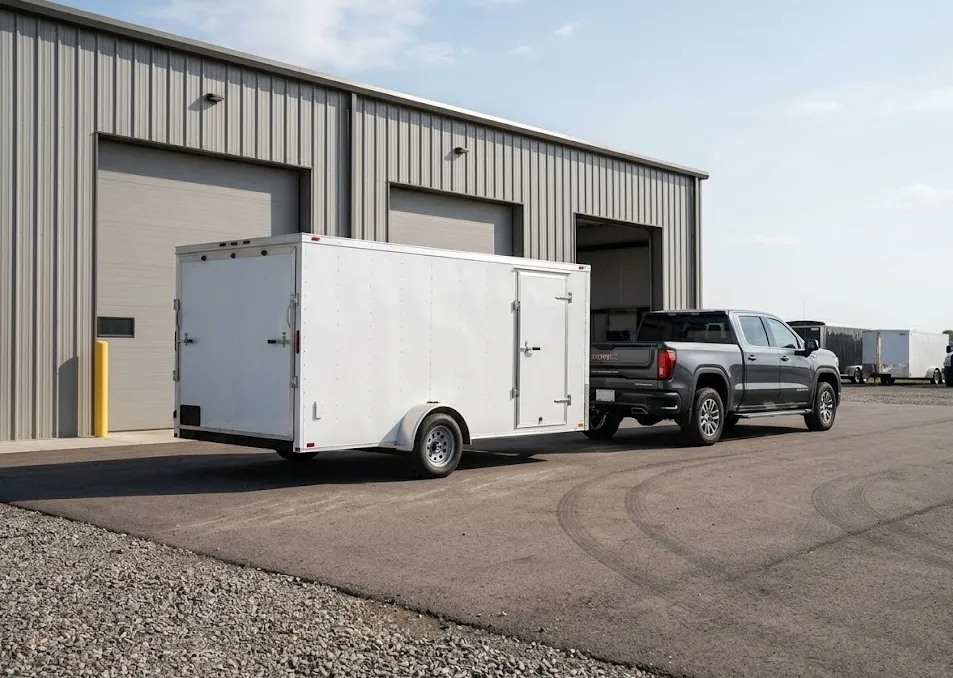
At first, the difference doesn’t seem that big.
A 6×12 trailer and a 7×14 enclosed trailer are both compact enough to tow without stepping into oversized territory. They’re both popular for hauling tools, equipment, furniture, or business inventory. And when you’re looking at dimensions online, two extra feet can feel pretty minor.
Then you stand inside both of them.
That’s usually when the decision becomes more real.
Because choosing between trailer sizes isn’t only about numbers. It’s about how you work, how much space you actually use, and whether you want a trailer that fits your current needs—or one that leaves room for what comes next.
If you’re trying to decide between an enclosed 6×12 trailer and a 7×14 setup, here’s what tends to matter most.
The 6×12 Trailer: Compact, Practical, and Easier to Tow
A 6×12 trailer is often the size people start with when they want something versatile without feeling oversized.
It’s easier to maneuver in tighter spaces, lighter to tow, and usually more manageable for everyday hauling. For smaller vehicles or occasional use, that simplicity can be a major advantage.
This size works especially well for:
- landscaping equipment
- motorcycles
- smaller moving jobs
- tool storage
- light business hauling
A lot of owners like that it doesn’t feel intimidating to tow. Parking is simpler. Backing up is less stressful. And for many people, an enclosed 6×12 trailer handles exactly what they need without extra bulk following behind the vehicle.
But space fills faster than most buyers expect.
That’s usually the trade-off.
The 7×14 Trailer: More Room, More Flexibility, More “Future-Proof”
A 7×14 enclosed trailer changes the experience in a noticeable way.
Not dramatically bigger. Just… easier to work inside.
You have more floor space, more wall space for shelving, and more flexibility when hauling multiple pieces of equipment at once. That extra width also matters more than people expect, especially when loading larger items or trying to move around comfortably inside the trailer.
A 7×14 trailer tends to make sense for:
- contractors carrying larger equipment
- side-by-sides or small vehicles
- mobile businesses
- heavier commercial use
- people who already feel cramped in smaller trailers
The bigger trailer often becomes less about “extra room” and more about reducing frustration.
Less unloading just to reach something. Less stacking. Less trying to make things fit.
Where Buyers Usually Start to Hesitate
Interestingly, most people don’t struggle with the size difference itself.
They struggle with what comes with it.
Because once you move from a 6×12 trailer to a larger trailer, other things start changing too:
- towing feel
- storage space at home
- fuel economy
- parking convenience
- overall weight
A smaller trailer often wins on convenience. A larger trailer usually wins on flexibility.
That’s why the “better” choice depends heavily on how the trailer will actually be used week after week.
The Question That Usually Makes the Decision Clearer
Here’s the question experienced trailer owners tend to ask themselves:
“Am I buying for what I haul today—or what I’ll probably haul six months from now?”
Because trailers have a way of filling up.
Businesses grow. Equipment changes. Storage expands. Projects get bigger.
A trailer that feels perfect right now can start feeling tight surprisingly fast.
That doesn’t automatically mean bigger is always smarter. But it does explain why many people eventually upgrade after starting with smaller setups.
Towing Experience Feels Different Too
This part often gets overlooked during shopping.
A 7×14 enclosed trailer doesn’t only carry differently—it tows differently too.
The added size and weight can feel more stable on highways, especially when loaded properly. But it also requires more awareness in tighter spaces and during parking.
Meanwhile, an enclosed 6×12 trailer tends to feel lighter and more agile, especially for newer trailer owners.
Neither experience is automatically better. It comes down to:
- your comfort level towing
- your tow vehicle
- how frequently you haul
- where you typically drive
City driving and occasional use often favor smaller trailers. Frequent hauling and growing workloads usually lean larger.
There’s Also the “Inside the Trailer” Factor
People often compare dimensions without thinking about how the trailer feels once they’re standing inside it.
That’s where the difference becomes more obvious.
Inside a 7×14 trailer, there’s more room to:
- organize tools
- install shelving
- walk around equipment
- separate cargo
- create a workflow
A 6×12 trailer can absolutely stay organized too—but it usually requires more intentional packing.
The bigger trailer simply gives you more margin.
So… Which One Actually Makes More Sense?
Honestly, both sizes make sense—for different people.
A 6×12 trailer usually works best when:
- towing simplicity matters most
- storage space is limited
- loads stay relatively small
- the trailer is used occasionally
A 7×14 enclosed trailer tends to work better when:
- hauling becomes more frequent
- equipment keeps growing
- organization matters daily
- future expansion is likely
Most buyers already know which direction they’re leaning. They’re usually just trying to confirm it.
Wagoneer Trailers: Helping You Choose the Trailer You Won’t Outgrow Too Quickly
At Wagoneer Trailers, we spend a lot of time helping customers compare trailer sizes in real-world terms—not just measurements on a spec sheet.
Because the right trailer isn’t only about what fits today. It’s about how comfortably the setup works once you’re actually using it every week.
Whether you’re considering an enclosed 6×12 trailer for lighter hauling or stepping into a 7×14 trailer for more flexibility, we help you think through towing, storage, workflow, and long-term use so the trailer feels right long after you leave the lot.

Cameron Fitzgerald
Owner of Wagoneer Trailers since 2019. Combines 9+ years of transportation industry expertise with a focus on customizable trailer solutions and customer-centric financing.
