
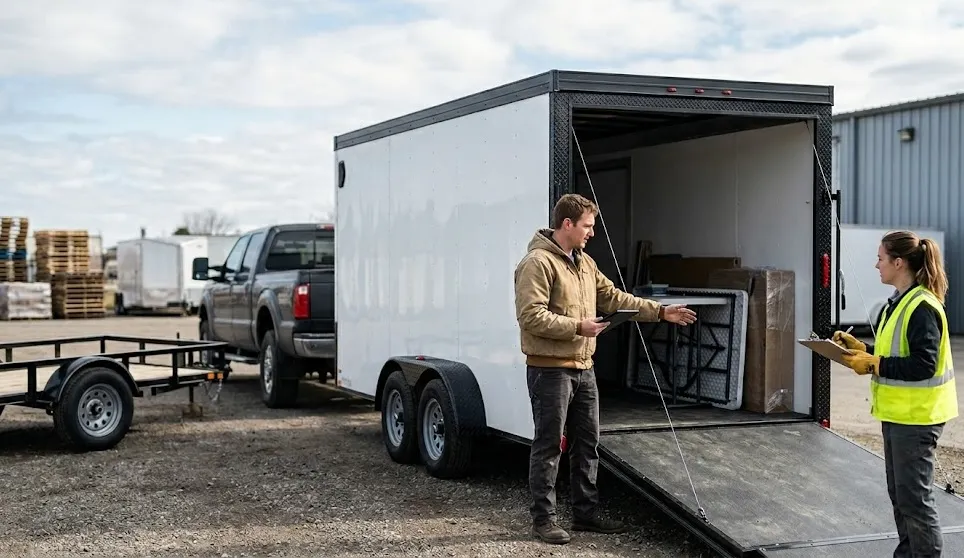
At some point, a smaller trailer stops cutting it.
You start with something like a 7×12 trailer—it works for a while. Then the tools multiply. Equipment gets bigger. Jobs get more demanding. Suddenly, you’re playing a daily game of “what fits and what stays behind.”
That’s usually when people start looking at a 7×20 enclosed trailer.
It’s not just about more space. It’s about working more efficiently, carrying everything in one trip, and having room to grow without constantly upgrading again.
Let’s break down what makes this size so popular—and how to know if it’s the right move for your business.
What Makes a 7×20 Enclosed Trailer Different
A 7×20 enclosed trailer gives you a noticeable jump in usable space compared to mid-size options like a 7×16 trailer.
That extra four feet doesn’t sound like much on paper. In practice, it changes how you load, organize, and move.
You get:
- More room for larger equipment
- Space to walk inside without squeezing around tools
- Better layout options for shelving or storage
- Flexibility to carry multiple types of cargo at once
For many business owners, this size starts to feel less like a trailer and more like a mobile workspace.
Typical Specs You Should Know
Before choosing a trailer, it helps to understand what you’re actually working with.
While specs vary depending on the build, most 7×20 trailers include:
- Tandem axles for higher weight capacity
- Interior height options (often six to seven feet)
- Rear ramp door for easy loading
- Side door for quick access
- Reinforced flooring for heavier loads
Weight capacity is another key factor. A 7×20 setup is designed to handle more than smaller options like a 7×12 trailer, making it a better fit for heavier equipment or bulkier cargo.
It’s built for work—not just occasional hauling.
Who Typically Uses a 7×20 Trailer
This size isn’t for everyone—and that’s a good thing.
A 7×20 enclosed trailer makes the most sense when your work demands space, consistency, and organization.
It’s commonly used by:
- Contractors carrying tools and materials daily
- Landscapers hauling equipment and supplies
- Mobile businesses (detailing, vending, repair services)
- Car haulers transporting vehicles or parts
If your setup already feels cramped in a 7×16 trailer, moving up to a 7×20 often solves that problem immediately.
When a Smaller Trailer Still Makes Sense
Bigger isn’t always better—it depends on how you work.
If your loads are lighter or you’re working in tighter spaces, a 7×12 trailer might still be the better option. It’s easier to maneuver, lighter to tow, and works well for basic hauling needs.
A 7×16 trailer sits in the middle. It offers more space than a 7×12 but doesn’t take up as much room as a 7×20.
The key difference is how often you’re pushing your trailer to its limits. If you constantly run out of space, upgrading saves time and hassle long-term.
How to Know If You’re Ready to Upgrade
Not sure if a 7×20 is the right move? A few signs usually make the answer clear.
If you’re running into these situations regularly, it may be time:
- You’re making multiple trips to carry everything
- You’re stacking or squeezing equipment to fit
- You don’t have room to organize tools properly
- Your business is growing and needs more capacity
Upgrading isn’t only about space—it’s about working more efficiently.
Smart Buying Tips Before You Commit
Before you choose a trailer, a few practical decisions can make a big difference in how it performs long-term.
Here’s what to focus on:
Think About Your Daily Workflow
Don’t only consider what you haul today. Think about how your needs might grow over time. A trailer that fits your future workload saves you from upgrading again too soon.
Plan Your Interior Layout
More space is only useful if it’s organized well. Consider shelving, tie-down points, and how equipment will be stored inside the trailer.
Check Your Tow Vehicle Capacity
A 7×20 enclosed trailer carries more weight, so your vehicle needs to handle it comfortably. Matching your trailer to your towing setup keeps everything running smoothly.
Choose Features That Save Time
Ramp doors, side access, and interior lighting all make daily use easier. Small upgrades can improve efficiency more than you might expect.
Wagoneer Trailers: Built for Growing Businesses
Choosing the right trailer isn’t only about size—it’s about how well it fits the way you work.
At Wagoneer Trailers, we build and sell enclosed trailers across Georgia designed for real-world use. That means durable construction, practical layouts, and options that support how you actually haul equipment day to day.
We work with businesses that are growing, scaling, and trying to make their setup more efficient. Whether you’re moving up from a 7×16 trailer or replacing a smaller unit, we help you find a trailer that works now and continues working as your needs evolve.
If you’re ready for a trailer that keeps up with your workload—not one that slows you down—we’re here to help.

Cameron Fitzgerald
Owner of Wagoneer Trailers since 2019. Combines 9+ years of transportation industry expertise with a focus on customizable trailer solutions and customer-centric financing.
