
You’ve loaded the car. It’s centered, it fits, and everything looks good. Then comes the part that actually matters most: keeping it in place while you’re driving.
A vehicle that isn’t secured properly can shift, roll, or put uneven pressure on your trailer. That affects handling, braking, and overall safety on the road. Whether you’re hauling a project car, a customer vehicle, or equipment, knowing the best way to strap a car to a trailer makes all the difference.
Let’s walk through what to do before you load, how to secure the vehicle correctly, and which methods work best.
Before You Even Load the Car
Before thinking about straps, take a moment to prepare the setup. This step is often overlooked, but it plays a big role in how secure the vehicle will be.
If you’ve ever wondered what should be done prior to loading a vehicle, start here:
- Check that the trailer is parked on level ground
- Inspect your tie-down points and anchor rails
- Confirm your straps are in good condition (no frays or tears)
- Make sure the trailer is properly hitched and stable
A stable setup gives you a better starting point when loading a car on a trailer and reduces movement from the beginning.
Choosing the Right Straps for the Job
Not all straps are built the same. Using the correct equipment is key to securing the vehicle properly.
When selecting straps for flatbed trailer or enclosed setups, look for:
- High weight ratings
- Durable webbing material
- Reliable ratchet mechanisms
Many people use car hauler trailer straps specifically designed for vehicles. These often include hooks or loops that attach easily to trailer anchor points.
Choosing quality straps helps prevent loosening during transport and keeps the vehicle stable over long distances.
Where to Secure the Vehicle
Knowing where to attach the straps is just as important as how you tighten them.
Every vehicle has specific car trailer tie down points, typically located along the frame or suspension. These points are designed to handle tension without causing damage.
Avoid attaching straps to weak components like:
- Bumpers
- Exhaust systems
- Body panels
Instead, focus on solid structural points that can safely hold the vehicle in place.
Two Common Tie-Down Methods
There are a few ways to secure a car, but most setups fall into two main methods.
Securing by the Frame
This method involves attaching straps directly to the vehicle’s frame.
When you tie down a car on a trailer with ratchet straps, the goal is to create tension that pulls the car downward and slightly forward. This helps prevent movement during braking and acceleration.
This method works well for many vehicles, especially when using strong anchor points.
Securing by the Wheels
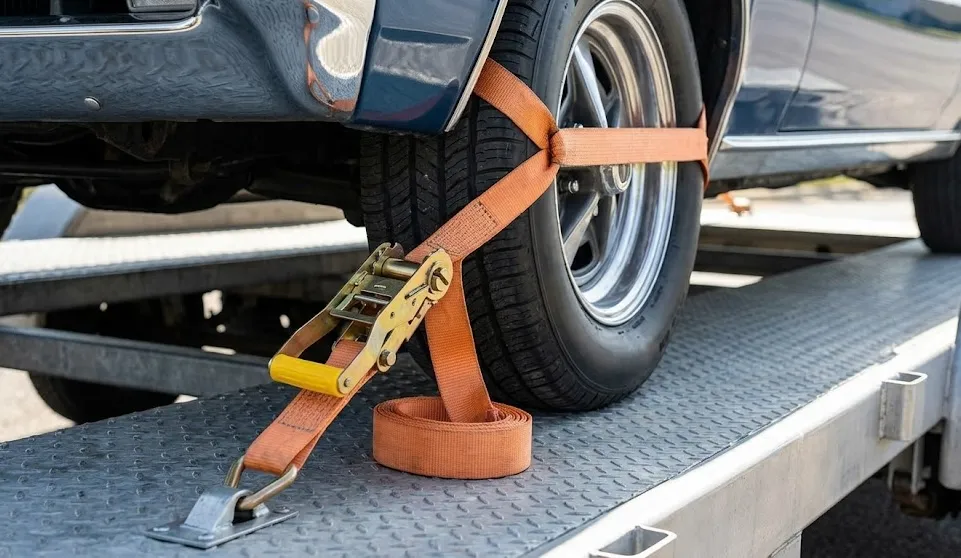
Another approach is strapping cars down by wheels, which keeps the suspension free to move naturally during transport.
Wheel straps wrap over the tires and attach to the trailer. This method reduces stress on the vehicle’s suspension and is often preferred for transporting performance or specialty vehicles.
Both methods can work effectively, depending on the trailer setup and the type of vehicle being transported.
How to Strap a Car to a Trailer Step by Step
If you want a clear process to follow, this is a reliable approach to strapping cars to trailers safely.
1. Position the Vehicle Correctly
Drive the car onto the trailer slowly and center it between the sides. Proper positioning helps maintain balance while towing.
2. Attach Front Straps
Secure straps to the front tie-down points and tighten them so the vehicle is pulled slightly forward.
3. Secure the Rear
Attach the rear straps and tighten them evenly. This prevents backward movement and stabilizes the vehicle.
4. Tighten With Ratchet Straps
Use ratchets to remove slack and create firm tension. When you tie down the car, the straps should feel tight but not overstressed.
5. Double-Check Everything
Before driving, inspect all connections. Look for loose hooks, twisted straps, or uneven tension.
This process helps ensure the vehicle stays secure throughout the trip.
Common Mistakes to Avoid
Even experienced haulers can run into issues if small details are overlooked.
Watch out for these common mistakes when tying down a car on a trailer:
- Using worn or damaged straps
- Uneven tension between straps
- Attaching to weak or incorrect points
- Skipping a final inspection
Another mistake to avoid is high hooking a trailer, where straps are attached at angles that reduce downward tension. Proper angles help keep the car firmly planted on the trailer deck.
Paying attention to these details helps prevent shifting during transport.
Wagoneer Trailers: Built for Safe and Secure Transport
A secure load starts with the right trailer setup. Strong anchor points, durable flooring, and thoughtful design all make it easier to safely transport vehicles.
At Wagoneer Trailers, we build and sell enclosed trailers across Georgia designed for real hauling needs. Our trailers are built with stability, durability, and practical tie-down options in mind, so securing your cargo is straightforward and reliable.
If you’re looking for a trailer that supports safe loading and secure transport from the start, we’re here to help you find the right fit.

Cameron Fitzgerald
Owner of Wagoneer Trailers since 2019. Combines 9+ years of transportation industry expertise with a focus on customizable trailer solutions and customer-centric financing.
