
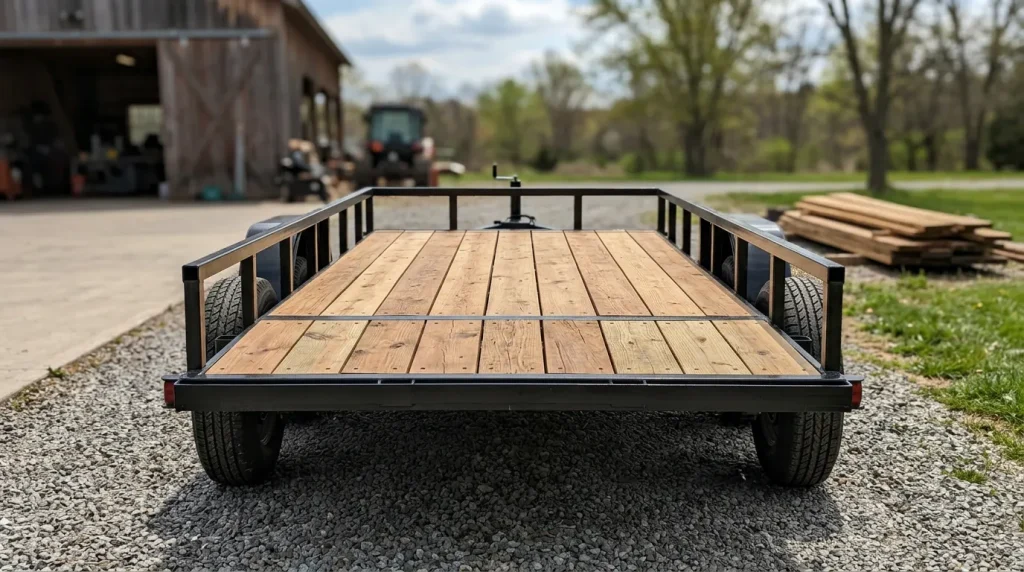
The “best” trailer floor depends a lot less on the wood itself than most people expect. A board can be tough, affordable, and easy to find—and still be the wrong fit for your trailer. Another can be incredibly durable but heavier and more expensive than your hauling routine really requires.
That’s why choosing the best wood for trailer deck use starts with one thing: what the floor is actually expected to handle. Once you know that, the options get much easier to narrow down.
Trailer Deck Wood at a Glance
Before getting into the details, here’s a quick comparison of the most common options.
|
Material |
Estimated Material Price* |
Best Suited For |
Weather Resistance |
Typical Use |
|---|---|---|---|---|
|
Pressure-Treated/Southern Pine |
About $1–$2 per linear ft. (Home Depot) |
Light to moderate use |
Good |
Open utility trailers, lawn equipment, general hauling |
|
Douglas Fir |
About $1.70+ per linear ft. (Home Depot) |
Moderate use |
Moderate with protection |
General-purpose trailer decks |
|
Oak |
Varies widely by grade and dimensions |
Heavier, frequent use |
Good when protected |
Equipment and demanding hauling |
|
Apitong/Keruing |
About $5–$8+ per linear ft. (TrailerDecking.com) |
Heavy, frequent use |
Very good |
Commercial and high-wear decks |
|
Exterior-Grade Plywood |
About $40–$60+ per sheet (Home Depot) |
General enclosed use |
Best when protected |
Enclosed cargo trailer interiors |
Note: Prices are general U.S. retail estimates based on Home Depot and TrailerDecking.com. Use categories are general only; actual capacity depends on the trailer’s construction and manufacturer specifications.
Start With the Workload
Before thinking about species, think about use. Is the trailer hauling a mower a few times a month? Is it carrying construction equipment every day? Is it an enclosed cargo trailer with a mostly dry interior, or an open utility trailer that sits outside in the weather?
Those differences matter because flooring takes abuse in different ways. Heavy equipment creates pressure and abrasion, outdoor exposure brings moisture and sun, and frequent loading wears down the same spots over and over again.
The best wood for utility trailer floor use is the one that can handle the specific type of wear your trailer sees most often.
Then Look at the Big Four: Cost, Strength, Weight, and Weather
You don’t need to memorize every wood species on the market. You really only need to compare the factors that affect daily use most.
Cost
Pressure-treated pine usually wins here. It’s affordable, easy to find, and practical for moderate use, which makes it a common choice when budget matters more than maximum durability.
Strength
Oak is stronger and more resistant to heavy loads, while Apitong is known for handling repeated abrasion and demanding commercial use. These materials may make more sense when the trailer works hard every day.
Weight
Denser woods can add more weight to the trailer itself, which matters because that weight counts against available payload. Stronger flooring can be useful, but it shouldn’t take away more cargo capacity than necessary.
Weather
Open trailers need flooring that can handle more exposure to rain, sun, mud, and moisture than enclosed trailers flooring. That makes weather resistance a bigger part of the decision for utility trailers that spend most of their time outdoors.
Once you know which of these factors matters most, the wood choices stop feeling so random.
So Where Does Each Wood Fit?
Pressure-treated pine works well when budget and availability matter most. It’s a practical choice for lighter-duty or occasional hauling, though it may show wear faster under heavier use.
Oak makes more sense when strength matters more than keeping weight or cost down. It’s durable and capable of handling tougher workloads, but it also adds more weight.
Apitong, sometimes called Keruing, is often used for more demanding trailer decks because it handles abrasion well. It’s a strong option for commercial use, though it tends to cost more and may be harder to source.
Douglas fir sits somewhere in the middle. It offers a useful balance of strength, weight, and price, which can make it a good fit for owners who want more durability than pine without jumping all the way to heavier hardwoods.
For enclosed trailers, exterior-grade plywood remains a practical option because it creates a flat, smooth interior surface that works well with shelving, tie-downs, cabinets, and other interior features.
Open Trailer or Enclosed Trailer? That Changes the Answer
An open trailer floor has a rougher life because it gets direct exposure to weather, dirt, moisture, and whatever gets tracked onto it. That makes resistance to rot and moisture more important, which is why treated softwoods and durable hardwoods are often used in these applications.
An enclosed trailer is more protected, which means a smooth plywood floor may make more sense for general cargo, tools, and interior customization. But enclosed doesn’t mean moisture-proof. Wet equipment, leaks, or standing water can still damage wood over time, so flooring choice should always go hand in hand with keeping the interior dry.
This distinction matters because the “best” material changes with the environment. A floor built for open-air exposure is solving a different problem than one designed primarily for a protected cargo space.
Replacing Trailer Deck Boards? Installation Matters Too
Choosing the right material is only part of the job. The new flooring also needs to work with the trailer’s frame, crossmembers, and original construction.
Start by confirming the correct flooring thickness and dimensions for the specific trailer. Once the old floor is removed, inspect the exposed frame and crossmembers before covering them again. If you find significant damage or corrosion, that should be evaluated before new flooring goes in.
Use the Right Tools
A typical replacement may require measuring tools, a saw suited to the flooring material, a drill or impact driver, pry tools, appropriate bits, and safety equipment.
Leave Room for Natural Wood Movement
Wood expands and contracts as moisture and temperature change. Replacement flooring should be installed according to the material and trailer manufacturer’s requirements rather than forced tightly into place without considering normal movement.
Match the Fasteners to the Trailer
Self-tapping trailer deck screws and carriage bolts are both common options, but the right choice depends on the frame and flooring setup.
Self-tapping deck screws can work well with compatible metal framing, while carriage bolts create a through-bolted connection when the trailer design provides access underneath. The important part is using hardware that matches the trailer’s construction instead of assuming one fastener is universally better.
Don’t Let “Stronger” Become the Only Goal
This is one of the easiest mistakes to make. If a wood is stronger, it must be better, right? Not always.
A heavier floor adds to the trailer’s empty weight, which means less available payload for the cargo you actually want to haul. If the floor is stronger than your workload requires, you may be carrying around extra weight and paying more for durability you’ll never really use.
The best boards for trailer deck use should be strong enough for the job without creating unnecessary trade-offs elsewhere.
How to Help Your Trailer Floor Last Longer
Different materials need slightly different care, but none of them benefit from being ignored.
Pressure-Treated Pine
Keep the boards clean and watch for checking, warping, splitting, or worn areas. If you use an additional sealer or protectant, follow the product and lumber manufacturer’s instructions.
Oak and Douglas Fir
Both can benefit from an appropriate exterior-grade wood treatment when exposed to weather. Pay particular attention to worn sections, board ends, and areas where moisture tends to sit.
Apitong or Keruing
Dense hardwoods may be maintained with penetrating oils or treatments designed specifically for that type of wood. Use products compatible with the material rather than a generic coating.
Exterior-Grade Plywood
Inside an enclosed trailer, focus on keeping moisture under control. Check edges, fastener penetrations, door areas, and places where wet equipment regularly sits.
Rather than using one universal maintenance schedule, inspect the floor periodically and follow the treatment manufacturer’s reapplication guidance. Exposure and storage conditions can change how often protection is needed.
What Should You Avoid?
The biggest mistake is choosing wood only by price or appearance. Another is assuming that any thicker or harder board automatically improves the trailer.
Board thickness, crossmember spacing, framing, trailer ratings, and the way the floor is secured all matter. If you’re replacing existing trailer deck boards, the new material needs to work with the trailer’s construction rather than simply being “better wood.”
That’s where manufacturer specifications or professional guidance can save you from making the wrong upgrade.
The Right Floor Should Match the Trailer, Not Impress You on Paper
You don’t need the toughest wood available. You need the right floor for the work.
If the trailer sees light use, pine may be enough. If it handles heavier equipment, oak or Apitong may make sense. If you want a balance, Douglas fir can be a smart middle ground. If the trailer is enclosed and you want a smooth interior surface, plywood may be the better fit.
That’s a much more useful way to choose the best wood for trailer deck use than simply picking whichever material sounds strongest.
Find the Right Enclosed Trailer With Wagoneer Trailers
At Wagoneer Trailers, we help customers across Georgia find enclosed trailers for equipment, business cargo, recreation, and everyday hauling. With customizable options, flexible financing, and direct delivery, we can help you choose a trailer that fits the way you actually plan to use it.
FIND YOUR ENCLOSED TRAILER HERE!
FAQs
What is the best wood for a trailer deck?
The best wood for trailer deck use depends on the workload. Pressure-treated pine works well for many moderate-duty applications, while oak and Apitong may be better suited to heavier, more frequent hauling.
What are the best boards for a utility trailer floor?
Pressure-treated pine is a common choice because it balances cost, availability, and resistance to rot. For heavier-duty use, hardwood options may provide greater strength and abrasion resistance.
How thick should trailer deck boards be?
The correct thickness depends on the trailer’s design, framing, crossmember spacing, and manufacturer specifications. Avoid choosing thicker boards without confirming that they’re appropriate for the trailer.
Is plywood a good choice for an enclosed trailer floor?
Yes. Exterior-grade plywood is commonly used in enclosed trailers because it provides a smooth, uniform surface. It should still be protected from leaks, standing water, and prolonged moisture exposure.
When should trailer deck boards be replaced?
Consider replacement when trailer deck boards show significant rot, soft spots, cracking, structural deterioration, or other damage that could affect their ability to support cargo safely.

Cameron Fitzgerald
Owner of Wagoneer Trailers since 2019. Combines 9+ years of transportation industry expertise with a focus on customizable trailer solutions and customer-centric financing.
