
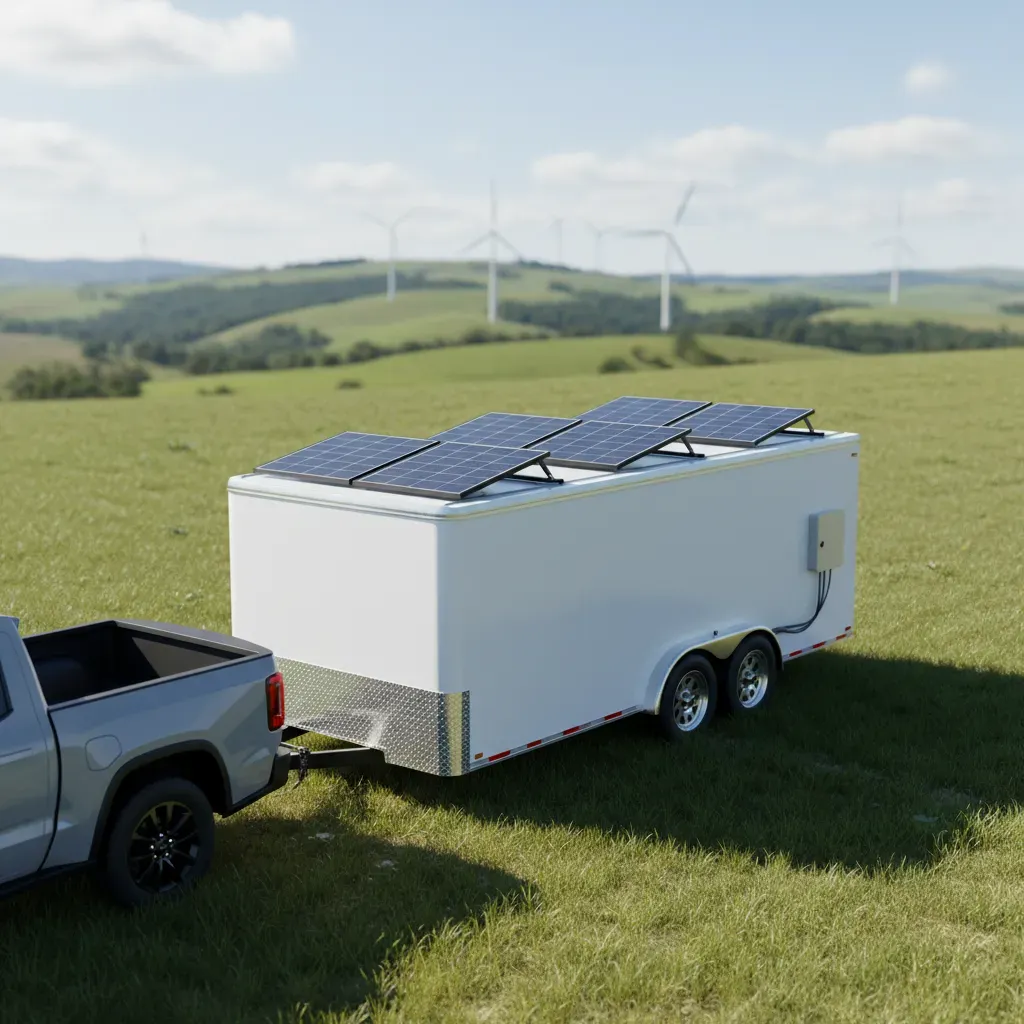
A trailer with its own power source sounds useful right away.
No hunting for an outlet. No dragging extension cords across a jobsite. No relying on a generator every time you need lights, chargers, or airflow.
That’s why more trailer owners are asking whether they can add trailer solar panels to an enclosed trailer.
The short answer is yes. But the better answer depends on how you actually use the trailer throughout the day.
Solar works best when it solves real power needs, not when it’s added just because it sounds impressive. So instead of starting with panels, start with your routine.
Morning: What Needs Power First?
Think about how the trailer gets used at the beginning of the day.
Maybe you open the doors before sunrise and need interior lights. Maybe batteries for tools need to charge before the first job. Maybe a fan helps move air before the trailer heats up.
These smaller power needs are often where an enclosed trailer solar setup makes the most sense. LED lighting, phone charging, small electronics, and ventilation fans usually don’t require a massive system, but they can make the trailer much easier to use.
The goal is not to power everything at once. It’s to support the parts of your trailer that make the day start smoother.
Midday: When Solar Starts Doing Its Job
Solar panels are most useful when the trailer sits in the sun for long stretches.
That could be at a jobsite, campsite, outdoor event, farm, or remote property. While the trailer is parked, the panels collect energy and send it into the system.
That energy can help recharge batteries, support small devices, or keep basic electrical systems running depending on the setup.
This is where cargo trailer solar power can become especially practical. If your trailer spends hours parked while you work, travel, or set up equipment, solar can help reduce your dependence on outside power sources.
Afternoon: When Power Demand Starts Adding Up
By the afternoon, small power needs can stack up.
Tool chargers, lights, fans, small appliances, security cameras, and other devices may all need energy at different times. That’s why planning matters.
A basic solar setup may work well for simple lighting and charging. A larger system may be needed if the trailer supports a mobile workshop, camper conversion, vending setup, or business equipment.
This is where many owners realize the panels are only part of the conversation. The full system needs to match the way the trailer is used, not just the amount of roof space available.
Evening: Why Batteries Matter So Much
Solar panels collect energy while the sun is out. Batteries make that energy useful later.
If you need lights after dark, want to charge tools overnight, or plan to use the trailer away from electrical hookups, battery storage becomes one of the most important parts of the setup.
Without batteries, solar power is limited to when the panels are actively producing energy. With batteries, the trailer becomes more flexible.
That’s why planning solar power for trailer use means thinking beyond the roof. Battery placement, wiring, ventilation, and access all affect how well the system works long-term.
Before You Install Solar, Plan the Trailer Around Power
The easiest time to plan a solar setup is before the trailer is fully built out.
Once shelves, cabinets, insulation, or finished walls are installed, adding wiring can become more complicated. Even if you don’t install solar right away, thinking ahead can save time later.
Consider where panels would fit on the roof, where batteries could be stored, how wires would run, and what equipment may need power in the future.
You may only need lights today. Later, you may want fans, chargers, cameras, or small appliances. A little planning now gives the trailer more room to grow.
Solar Makes Sense When It Matches the Trailer’s Purpose
Solar is not necessary for every enclosed trailer.
If your trailer stays near power most of the time, a standard electrical setup may be enough. But if you work in remote areas, attend outdoor events, camp off-grid, or use the trailer as a mobile workspace, solar can make the trailer more independent and easier to use.
The best setup is the one that supports your real routine.
When solar solves a daily problem, it becomes more than an upgrade. It becomes part of how the trailer works.
Wagoneer Trailers: Helping You Build for What Comes Next
At Wagoneer Trailers, we help customers across Georgia choose enclosed trailers that fit how they work, travel, and haul.
If you’re planning an enclosed trailer solar setup, camper conversion, mobile workshop, or business trailer, we can help you think through the features that make sense from the beginning. From trailer size and layout to future customization options, we focus on building trailers that can support your needs now and grow with your plans later.

Cameron Fitzgerald
Owner of Wagoneer Trailers since 2019. Combines 9+ years of transportation industry expertise with a focus on customizable trailer solutions and customer-centric financing.
