
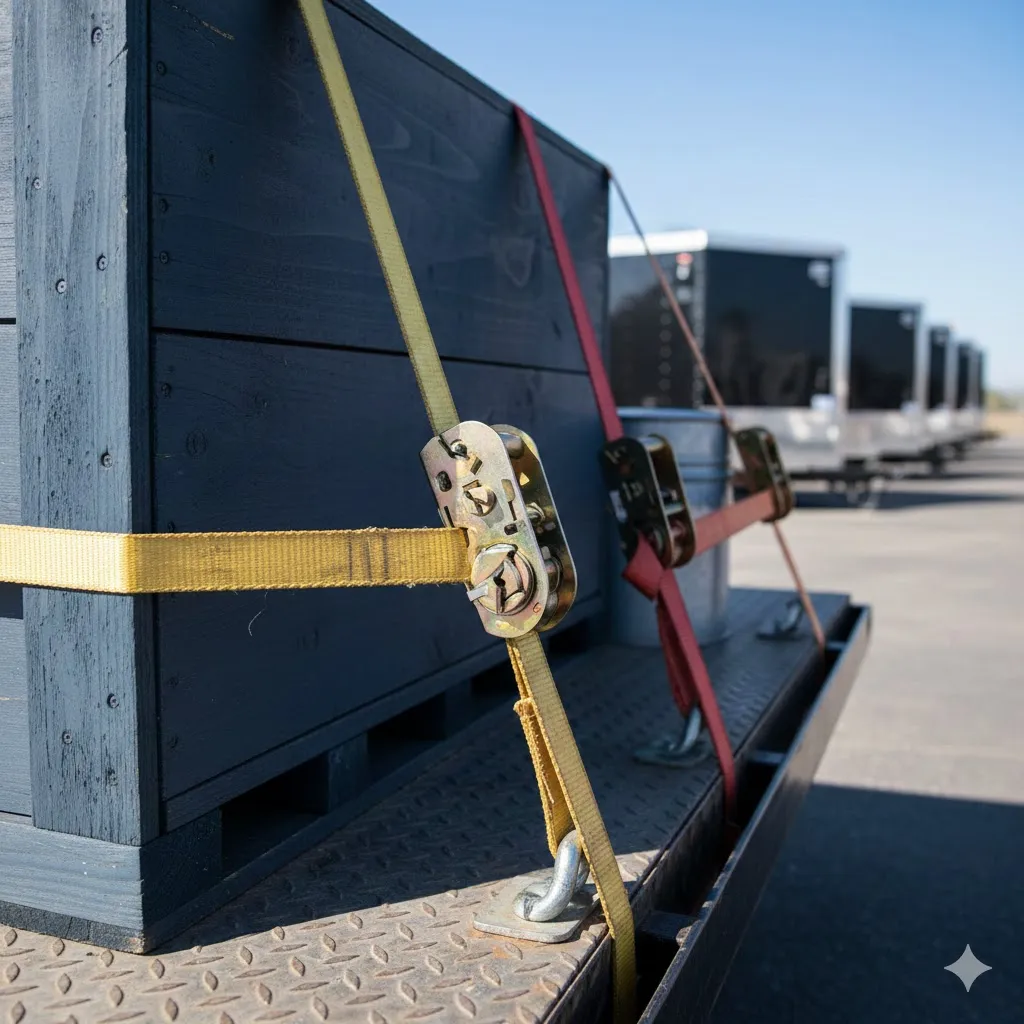
Have you ever pulled onto the highway, glanced in the mirror, and wondered if the mower, ATV, or pallet behind you might decide to slide off at the next bump? That moment of doubt is nerve-racking—and completely avoidable when you trust the right gear and method.
In this guide, you’ll discover how to pick, use, and care for the gear that keeps your load exactly where you put it. We’ll break down working load limits, compare strap styles, walk through a foolproof tie-down routine, share easy maintenance habits, and flag the mistakes that cause cargo to fly. Stay with me, and road-worry turns into road-confidence.
Understanding WLL vs. Breaking Strength
The first numbers you see on a strap’s label are the Working Load Limit (WLL) and the breaking strength. WLL is the maximum weight you can safely restrain during normal transport. Think of it as the everyday “do not exceed” number that ensures the strap performs trip after trip.
Breaking strength, on the other hand, is the load that will snap the webbing in a controlled lab test. Regulations—and plain common sense—say you should never plan to reach that point. Instead, divide the breaking strength by a safety factor (usually 3) to calculate the WLL. By basing your choices on WLL, you comply with towing safety guidelines and, more importantly, you protect everything riding on your trailer and in your life.
Matching Strap Types to Your Hauling Needs
Before you head to the store or order online, it helps to know which style solves which problem. In the next sections, we’ll compare three popular options so you can choose with confidence.
Ratchet Straps
Ratchet straps are the go-to for serious tension that stays put over long distances. The mechanical ratchet allows you to crank the webbing tight without superhuman strength, making ratchet straps ideal for trailer setups, vehicles, machinery, and bulkier equipment.
Cam Buckle Straps
Cam buckles rely on a simple lever-style clamp. They’re perfect for fragile cargo—wood furniture, kayaks, or anything that might be crushed by too much force. Because you pull them snug by hand, they eliminate the risk of overtightening.
E-Track Straps and Accessories
If your trailer walls or floor feature E-track, dedicated straps click in and lock instantly. Pair them with trailer load bars to create layered, inside-the-box restraint systems for pallets, boxes, or motorcycles. This approach also works especially well when paired with smart enclosed trailer shelving ideas that keep tools and supplies separated and easy to secure.
A Step-by-Step Tie-Down Routine You Can Trust
Great hardware means nothing if the technique is sloppy. The steps below outline a repeatable process that removes the guesswork every time you strap trailer cargo.
Plan Your Four Points
Begin by selecting four anchor points that form an “X” over the load. Map out where you’ll strap trailer gear long before you back into position; planning eliminates scrambling and helps maintain even weight distribution—an approach we also follow when loading a trailer.
Attach, Route, and Tension
Hook or loop each strap, ensuring the webbing lies flat without twists. Ratchet just enough to compress the suspension of a vehicle or seat a pallet firmly on the deck—no more, no less.
Guard Against Sharp Edges
Webbing hates abrasion. Slip corner protectors, rubber hose, or even folded cardboard wherever the strap kisses metal corners or rough lumber. It costs cents and saves dollars.
Final Walk-Around
Finish with a full lap. Tug each handle, check for crossed or snagged webbing, and stow loose tails. If a winch cable shares the deck, confirm it clears every tie-down; this quick habit pairs well with our guide to safely adding a winch to a trailer.
Maintenance and Inspection Keep Straps Working Longer
Whether you’re caring for ratchet straps kits or cam buckle assemblies, a few simple habits can stretch the life of your tie-downs and your peace of mind:
- Wipe grit from webbing after each trip; dirt works like sandpaper.
- Store straps in a dry bag or bin—ultraviolet light weakens fibers.
- Inspect stitching and labels monthly; faded tags indicate uncertain ratings.
- Retire straps with cuts, burns, or melted edges.
- Lubricate ratchet mechanisms lightly with silicone spray; never oil, as it can attract grime.
- Replace hardware that shows rust or bent hooks; metal fatigue is silent.
- Swap worn trailer load bars before they fail; cheap insurance beats costly damage.
- Mark purchase dates on the strap so you always know its age.
Common Mistakes That Put Loads—and Lives—at Risk
Even seasoned haulers slip into bad habits. The following points highlight pitfalls you’ll sidestep once you recognize them.
Using Too Few Straps
One strap is never a plan. Regulations often require at least four on vehicles over 10,000 lb. Doubling up also gives you redundancy if a fitting fails.
Ignoring Angle and Alignment
Straps that run straight up and down provide little sideways restraint. Aim for a 45-degree angle down to the deck to properly absorb lateral forces.
Overlooking Strap Wear
Frayed edges and sun-bleached webbing look harmless until they pop. Build a monthly inspection into your routine and replace questionable gear promptly—this habit is at the heart of smart utility trailer tie-down ideas that actually work.
Road-Ready Confidence with Wagoneer Trailers
At Wagoneer Trailers, we combine expert engineering with real-world hauling experience to deliver trailers—and advice—that keep your business or weekend on schedule. Bring us your questions about cargo control, custom anchor points, or new builds, and we’ll craft a solution that feels tailor-made. Our team can walk you through a range of enclosed trailers in Florida and utility-trailer tie-down options that match your unique equipment and routes. Ready to nail down your next secure haul? Contact us today and let’s get rolling.

Cameron Fitzgerald
Owner of Wagoneer Trailers since 2019. Combines 9+ years of transportation industry expertise with a focus on customizable trailer solutions and customer-centric financing.
