
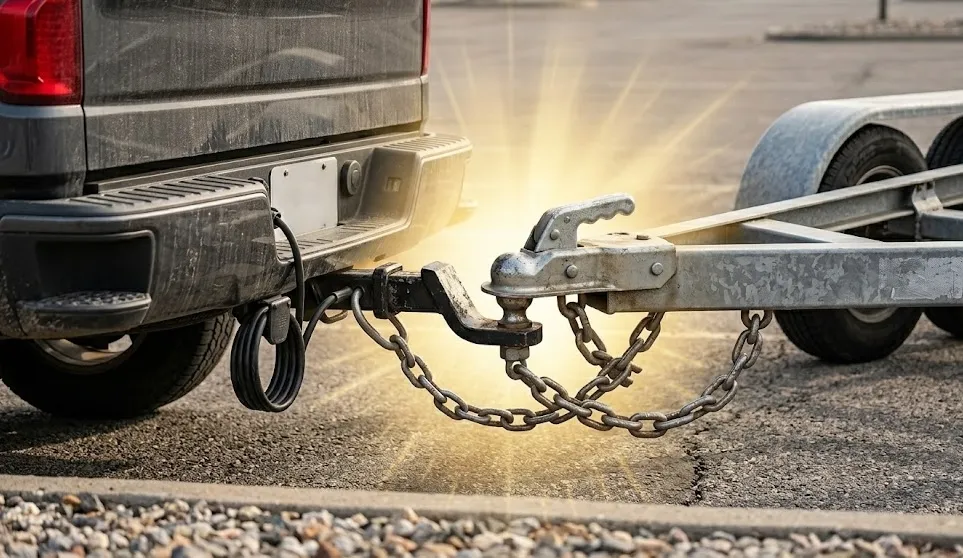
You can have the right trailer, the right load, and the right plan—and still run into problems if your hitch isn’t up to the job.
It’s one of those details that’s easy to overlook. Everything connects at that one point between your vehicle and the trailer, and if that connection isn’t matched correctly, it affects stability, braking, and overall control.
That’s where understanding a class 3 trailer hitch comes in. It’s one of the most common hitch options out there, but knowing when to use it—and when not to—can make a big difference in how safely you tow.
Let’s break it down in a way that actually makes sense.
What a Class 3 Trailer Hitch Is Designed For
A Class 3 hitch sits right in the middle of the towing spectrum. It’s commonly found on SUVs, pickup trucks, and larger crossovers, and it’s built to handle moderate to heavy loads.
Most setups include a 2-inch receiver, which makes it compatible with a wide range of trailers and accessories.
When people look at class hitches explained, this category often stands out because it covers a lot of everyday towing needs—without jumping into heavy-duty commercial territory.
It’s a go-to option for hauling:
- Enclosed trailers
- Utility trailers
- Small equipment loads
- Vehicles and ATVs
For many drivers, it’s the sweet spot between capability and practicality.
Understanding Class 3 Hitch Towing Capacity
Capacity is where things get real.
The typical class 3 hitch towing capacity ranges from about 3,500 to 8,000 pounds, depending on the setup and whether a weight distribution system is used.
But here’s the important part: the hitch rating is only one piece of the puzzle.
You also need to consider:
- Your vehicle’s towing capacity
- The trailer’s total weight (including cargo)
- Tongue weight limits
- Hitch and ball configuration
A hitch might be rated for a certain weight, but if your vehicle can’t handle it, the system won’t perform the way it should.
That’s why looking at trailer hitch class ratings as a whole—not just one number—matters.
Class 2 vs Class 3: What’s the Real Difference?
This is where a lot of people pause.
When comparing class 2 hitch vs class 3, the main differences come down to receiver size and towing capability.
Class 2 hitches typically use a 1¼-inch receiver and are designed for lighter loads. They’re often found on smaller vehicles and are better suited for basic hauling.
Class 3 hitches step things up with a 2-inch receiver and a higher weight rating. That increase opens the door to more trailer options and heavier loads.
In practical terms:
- Class 2 works for light-duty hauling
- Class 3 gives you more flexibility and capacity
If you’re planning to tow regularly—or carry heavier loads—a Class 3 hitch is usually the more reliable choice.
How to Know If a Class 3 Hitch Is Right for You
Choosing the right hitch comes down to how you plan to use it.
If your setup includes an enclosed trailer, equipment, or anything beyond light hauling, a class 3 trailer hitch is often the better fit.
But it’s not only about weight—it’s about control.
A properly matched hitch helps:
- Keep the trailer aligned with your vehicle
- Improve braking response
- Reduce strain on your suspension
- Support smoother towing overall
When everything is matched correctly, towing feels stable instead of unpredictable.
Bonus Tips for Choosing and Using a Hitch Safely
Getting the right hitch is one thing. Using it correctly is what keeps everything working the way it should.
Here’s how to make sure your setup stays safe and reliable:
- Match your hitch to your vehicle’s capacity. Don’t rely on the hitch rating alone. Your vehicle’s towing capacity should always guide your final setup.
- Use the correct ball size and mount. Even with the right hitch, mismatched ball sizes can create instability. Always confirm compatibility with your trailer coupler.
- Check your connections before every trip. Take a minute to inspect the hitch pin, safety chains, and coupler lock. Small checks prevent bigger problems on the road.
- Balance your trailer load. Proper tongue weight improves control and reduces stress on the hitch system. Balanced loading plays a big role in overall towing stability.
- Re-check after a short drive. After a few miles, stop and inspect your setup again. This helps catch any movement or loosened connections early.
Wagoneer Trailers: Helping You Tow With Confidence
The right hitch is only part of the equation. The trailer itself plays just as big of a role in how your setup performs on the road.
At Wagoneer Trailers, we focus on building and selling enclosed trailers across Georgia that are designed for real-world hauling. That means durable frames, balanced weight distribution, and setups that work well with common hitch configurations like Class 3 systems.
We don’t just help you find a trailer—we help you make sure your entire setup makes sense together.
If you’re looking to pair your trailer with the right hitch and feel confident every time you tow, we’re here to help you get it right.

Cameron Fitzgerald
Owner of Wagoneer Trailers since 2019. Combines 9+ years of transportation industry expertise with a focus on customizable trailer solutions and customer-centric financing.
