
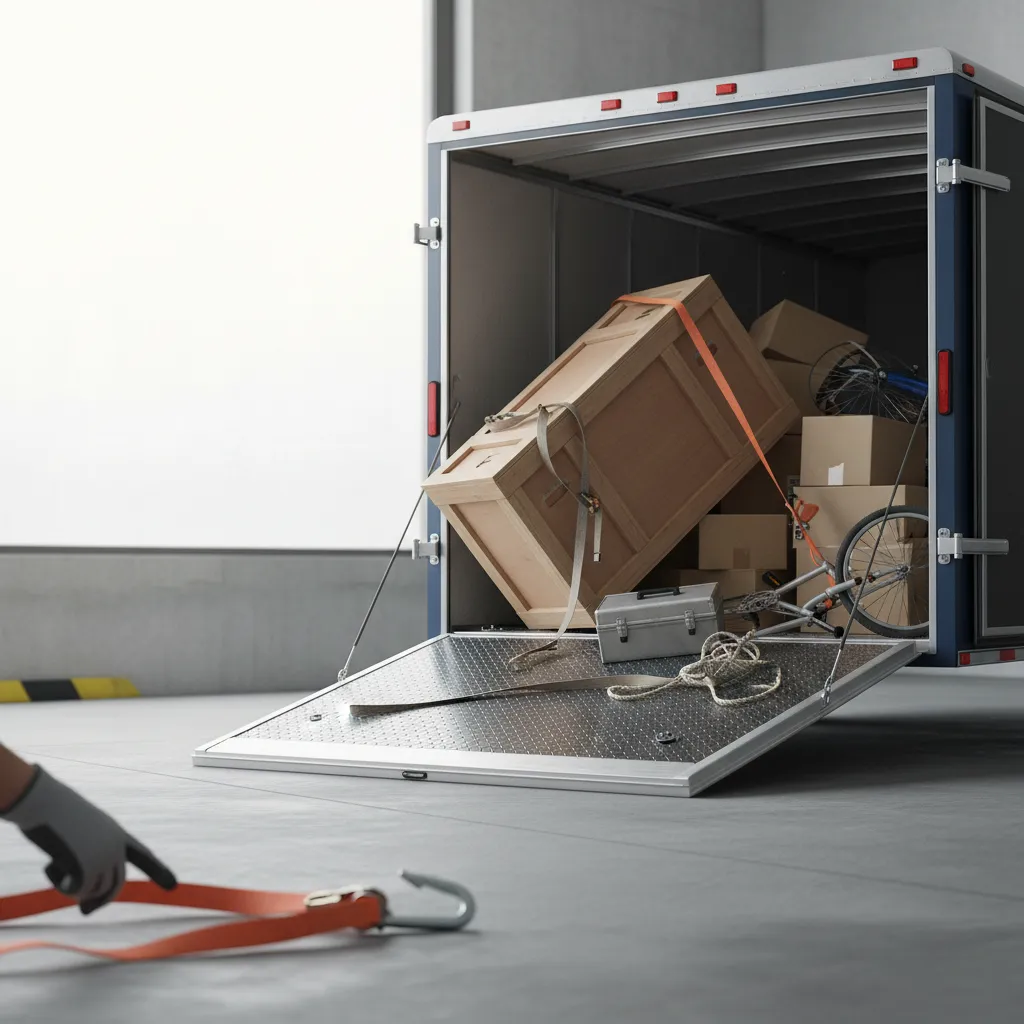
Most cargo damage doesn’t happen because someone forgot to use straps.
It happens because the straps were attached in the wrong place, tightened unevenly, or trusted to hold something they weren’t designed to secure.
That’s what makes trailer tie down mistakes frustrating. Everything can look fine when you close the doors, yet a few miles of braking, turning, and road vibration can expose a weak setup quickly.
Learning how to secure cargo properly isn’t about using more straps than necessary. It’s about understanding where movement can happen and stopping it before the trailer starts rolling.
Where Tie-Down Problems Usually Begin
Cargo doesn’t behave the same way inside a moving trailer as it does while parked.
Acceleration can push it backward. Braking sends force forward. Turns create side-to-side movement, and bumps add another layer of motion. Your tie-down system has to account for all of it.
Here are some of the mistakes that can turn an otherwise normal trip into damaged equipment or shifted cargo.
Mistake #1: Strapping Something Down Without Stopping Side-to-Side Movement
A strap can feel extremely tight and still leave cargo room to move.
This often happens when all the tension is pulling in one direction. The item may stay firmly against the floor but still shift sideways during a turn.
That movement can cause tools, machinery, furniture, or equipment to strike trailer walls or nearby cargo.
When figuring out how to tie down cargo, think about movement from several directions. The goal is to prevent the load from sliding, tipping, rolling, or shifting—not simply hold it downward.
Mistake #2: Using an Easy Attachment Point Instead of a Strong One
The closest place to hook a strap isn’t automatically the right one.
Handles, thin brackets, body panels, or other convenient parts may not be designed to carry tie-down forces. Tightening against them can bend, crack, or damage the item before the trailer even moves.
Whenever possible, secure cargo using appropriate structural attachment points or designated tie-down locations.
Good trailer cargo securement protects the cargo from both movement and the straps themselves.
Mistake #3: Tightening Straps Until “More” Feels Safer
There’s a point where additional tension stops helping.
Overtightened straps can compress furniture, bend equipment, damage finishes, or place unnecessary force on components that weren’t designed for it.
This is especially important when transporting more delicate cargo.
Your trailer tie down straps should be properly rated for the load and tightened enough to secure it without using excessive force as a substitute for good positioning.
A cargo item that needs extreme strap tension to stay put may need a better placement or additional securement instead.
Mistake #4: Letting Straps Rub Against Sharp Edges
Webbing and sharp metal don’t get along particularly well.
If a strap runs across a corner, metal edge, or abrasive surface, road vibration can slowly wear through the material during transport. The strap may look perfectly fine when you leave and be significantly weaker by the time you arrive.
Position straps away from damaging edges when possible and use appropriate protection where contact cannot be avoided.
Checking the strap path before departure takes only a moment and can prevent both cargo damage and tie-down failure.
Mistake #5: Assuming the Load Will Stay Exactly Where You Put It
This one catches people because the trailer may be loaded correctly at first.
Then the trip begins.
Boxes settle. Wheeled equipment shifts slightly. Soft cargo compresses. Straps can lose tension as the load changes underneath them.
That’s why securement shouldn’t end when the rear door closes.
For longer trips, checking your load and trailer tie down straps after traveling a short distance and periodically when appropriate can help catch movement before it becomes a larger problem.
Good Tie-Downs Start Before the First Strap Comes Out
One of the easiest ways to improve cargo securement is to think about placement first.
Heavier items should be positioned with the trailer’s weight distribution and manufacturer guidance in mind. Equipment should sit where useful anchor points are accessible, and smaller items shouldn’t be left loose around heavier cargo.
Once the layout makes sense, the straps have a much easier job.
That’s really the difference between “holding something down” and securing it for transport.
The Best Setup Should Feel Predictable
You shouldn’t open your trailer after every drive wondering what moved.
A well-planned tie-down system keeps equipment where you placed it, protects cargo from unnecessary strap pressure, and gives you a repeatable process every time you load.
Avoiding common trailer tie down mistakes doesn’t require an elaborate setup. It requires the right equipment, thoughtful attachment points, and a few extra minutes before you pull onto the road.
Those minutes are usually much cheaper than replacing damaged cargo later.
Haul More Securely With Wagoneer Trailers
At Wagoneer Trailers, we help customers across Georgia find enclosed trailers that fit the equipment, tools, vehicles, and commercial cargo they actually need to transport.
From trailer size and interior layout to customizable tie-down and storage options, we can help you choose a setup that makes loading and secure hauling easier from day one.
CUSTOMIZE YOUR CARGO TRAILER – GET IN TOUCH!

Cameron Fitzgerald
Owner of Wagoneer Trailers since 2019. Combines 9+ years of transportation industry expertise with a focus on customizable trailer solutions and customer-centric financing.
