
Trailer fenders don’t get much attention—until something goes wrong.
A cracked fender, loose mounting, or missing protection quickly turns into flying debris, chipped paint, or worse. What looks like a simple curved piece of metal actually plays a big role in protecting your trailer, your cargo, and the vehicles around you.
If you’re looking into fenders for trailers, it helps to understand what they do, how to choose the right ones, and how to install them correctly without overcomplicating the process.
What Trailer Fenders Actually Do
At a glance, fenders sit over your trailer wheels and catch whatever the tires throw up.
But their job goes further than that.
They help:
- Block rocks, mud, and road debris
- Protect cargo and trailer walls
- Improve safety for nearby drivers
- Support visibility when paired with trailer reflectors
In many setups, fenders also work alongside lighting components like the trailer tail lamp, helping keep your trailer visible on the road.
It’s a simple part—but it contributes to both safety and durability.
Different Types of Trailer Fenders
Not all fenders are built the same. The right type depends on your trailer style and how you use it.
Single Axle Fenders
These are designed for trailers with one axle and cover a single wheel on each side. They’re common on smaller utility trailers and lighter-duty setups.
They’re compact, easy to install, and usually more affordable.
Tandem Axle Fenders
Tandem fenders cover two wheels on each side and are built for larger trailers carrying heavier loads.
Because they span a longer area, they provide more protection and often double as a step surface in some designs.
Jeep-Style or Flat-Top Fenders
These are wider and flatter, giving you a surface you can step on when accessing the trailer.
They’re often used on off-road or heavy-duty trailers where durability matters more than appearance.
Choosing the Right Material
Material choice affects how your fenders perform over time.
Each option comes with its own advantages depending on how your trailer is used.
Steel Fenders
Steel is strong and durable, making it a reliable choice for heavy use. It holds up well against impact but can be prone to rust if not properly coated.
Aluminum Fenders
Aluminum is lightweight and naturally resistant to corrosion. It’s a good option for trailers exposed to weather or frequent outdoor use.
Plastic or Poly Fenders
These are flexible and resistant to dents, but they may not hold up as well under heavy loads or constant wear.
The best choice depends on your environment and how often the trailer is used.
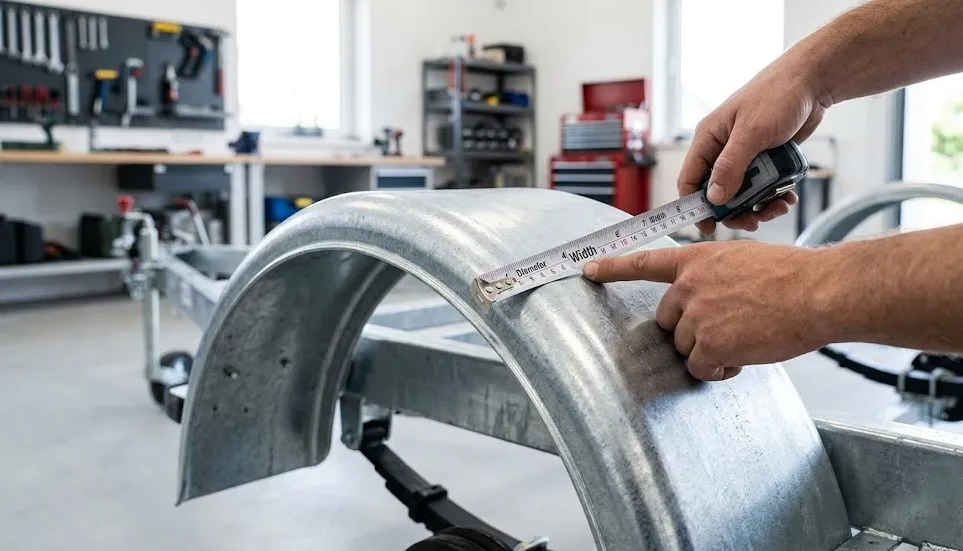
Getting the Size Right
Sizing matters more than most people expect.
A fender that’s too small won’t provide enough coverage. One that’s too large may interfere with tire movement or look out of place.
When measuring for fenders for trailers, focus on:
- Tire diameter and width
- Clearance between tire and frame
- Axle configuration (single vs tandem)
Leave enough space for suspension movement so the tire doesn’t rub against the fender while driving.
How Fenders Fit Into the Rest of Your Trailer Setup
Fenders don’t exist in isolation—they’re part of a larger system.
They work alongside components like:
- Your trailer stand, which supports the front of the trailer when parked
- Lighting systems, including the trailer tail lamp
- Safety features like trailer reflectors
When everything is aligned correctly, the trailer feels more complete, more stable, and safer to operate.
A Practical Approach to Installing Trailer Fenders
Installing fenders doesn’t need to be complicated, but attention to detail matters.
If you’re replacing or adding fenders, a few simple steps can help you get it right the first time.
Check Fit Before Drilling
Place the fender over the wheel and confirm alignment. Make sure there’s enough clearance for tire movement before committing to mounting points.
Use Strong Mounting Hardware
Fenders deal with constant vibration. Bolts, brackets, and reinforcements should be secure enough to handle long-term use.
Align With the Wheel Properly
The fender should sit centered over the tire. Misalignment can reduce protection and affect how the trailer looks.
Secure Wiring and Lighting Nearby
If your fender sits close to lighting components like a trailer tail lamp, make sure wires are protected and not exposed to rubbing or damage.
Double-Check Stability
After installation, give the fender a firm check. It should feel solid with no movement or flex.
Taking a few extra minutes during installation helps prevent issues later.
Wagoneer Trailers: Built for Strength, Protection, and Real Use
Every part of a trailer has a purpose—even the ones that don’t always get attention.
At Wagoneer Trailers, we build and sell enclosed trailers across Georgia designed to handle real-world use. That includes durable components, solid construction, and setups that work together to protect your cargo and improve performance on the road.
We focus on trailers that aren’t only functional but built to last—so you’re not dealing with avoidable issues down the line.
If you’re looking for a trailer that’s designed with both durability and practicality in mind, we’re here to help you find the right fit.

Cameron Fitzgerald
Owner of Wagoneer Trailers since 2019. Combines 9+ years of transportation industry expertise with a focus on customizable trailer solutions and customer-centric financing.
