
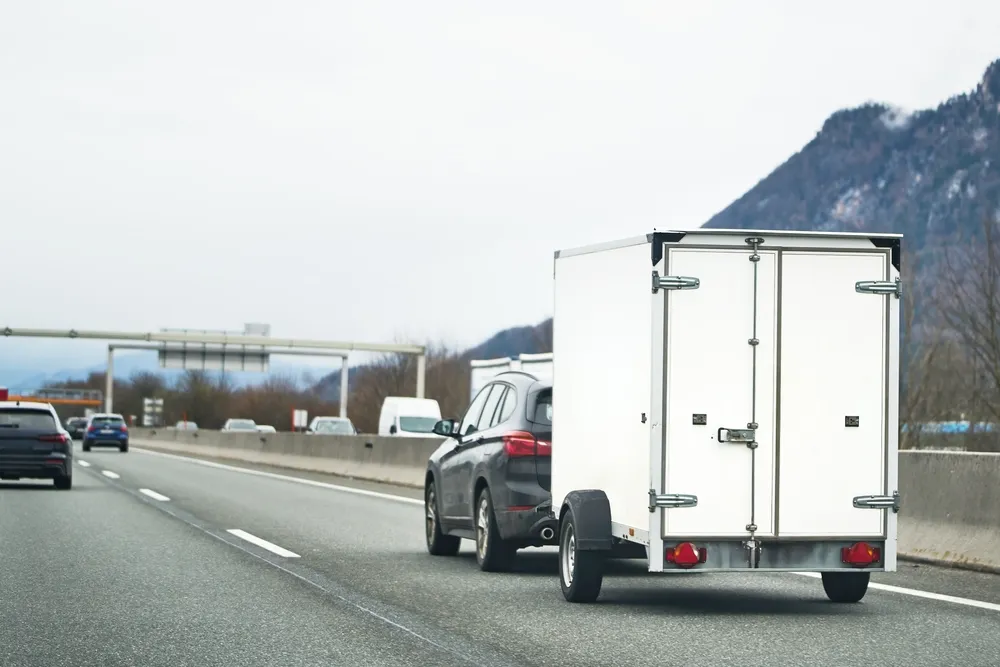
If your trailer feels like it’s jumping, shaking, or lifting slightly off the pavement while you drive, you’re not imagining it. A bouncing trailer isn’t just uncomfortable — it can affect steering control, increase tire wear, and place extra strain on your suspension and hitch.
Many owners notice it most when towing without cargo. You might even find yourself asking, why does my trailer bounce when empty?
In most cases, the answer comes down to weight distribution, suspension setup, and overall road conditions. The good news is that once you understand why it happens, you can usually fix it. Let’s walk through it step by step.
Why Trailer Bouncing Happens
Trailers are designed to carry weight. Their suspension systems — typically leaf springs — are built to compress under load. When a trailer is loaded, that weight pushes the suspension down slightly. This compression helps keep the tires planted firmly on the road.
When the trailer is empty, there’s very little downward pressure. The suspension stays stiff, which means it reacts more sharply to bumps. That’s when trailer hop becomes noticeable.
In simple terms: less weight means less stability. But being empty isn’t the only reason a trailer may bounce.
5 Common Causes of a Bouncing Trailer
Understanding the real cause helps you correct the issue instead of guessing.
1. Towing While Empty
The most common reason for that bouncing is simple — the trailer isn’t carrying any weight.
Leaf spring suspensions are designed to flex under load. Without cargo, they don’t compress enough to absorb road impact effectively. As a result, every bump feels stronger and more exaggerated.
Light trailers simply react more to uneven pavement.
2. Incorrect Tongue Weight
Tongue weight refers to how much downward force the trailer applies to the hitch.
If there isn’t enough weight toward the front of the trailer, the rear may feel light and unstable. That imbalance can increase sway and vertical bouncing.
Proper tongue weight helps keep the trailer steady and aligned behind your vehicle.
3. Worn Suspension Components
Suspension parts wear over time. Leaf springs can weaken. Bushings can deteriorate. Bolts can loosen. When that happens, the trailer loses its ability to absorb shock smoothly.
A bouncing trailer that seems worse than usual may be signaling worn suspension components that need attention.
4. Tire Pressure That’s Too High or Too Low
Tires play a major role in ride comfort. Overinflated tires create a stiffer ride, causing the trailer to bounce more over bumps. Underinflated tires can create instability and uneven contact with the road.
Checking tire pressure regularly and adjusting it based on manufacturer recommendations helps smooth out movement.
5. Rough or Uneven Road Surfaces
Some bouncing is simply caused by road conditions. Expansion joints, potholes, gravel roads, and uneven pavement can exaggerate movement — especially when towing an empty unit. While you can’t control the road, you can control how prepared your trailer is to handle it.
How to Reduce Trailer Hop
If you’re experiencing noticeable trailer hop, start with simple adjustments before assuming something major is wrong.
- Add light, balanced weight when possible. Even a small, properly secured load can compress the suspension enough to reduce bounce.
- Adjust weight distribution. Place cargo toward the front half of the trailer to improve tongue weight and overall stability.
- Inspect suspension components. Look for worn springs, loose hardware, or visible damage. Fixing small issues early prevents larger problems later.
- Drive more smoothly over uneven surfaces. Reducing speed over rough pavement can significantly decrease vertical movement.
Often, small corrections make a noticeable difference.
How to Prevent a Bouncing Trailer in the Future
Preventing excessive bounce starts with regular inspections and proper setup.
If you frequently tow without cargo, keep in mind that lighter trailers naturally ride firmer. With consistent maintenance and balanced weight distribution, that movement stays controlled instead of becoming disruptive.
Here’s how to prevent repeated trailer hop:
- Inspect suspension components at least once a year
- Keep tire pressure within manufacturer guidelines
- Avoid consistently overloading the trailer
- Make sure hitch components are tight and properly rated
- Distribute cargo evenly when hauling
A few simple habits can dramatically improve towing comfort and long-term performance.
Wagoneer Trailers: Built for Stable, Reliable Towing
A trailer’s construction plays a major role in how it handles on the road. Strong frames, properly positioned axles, and balanced design all contribute to smoother performance.
At Wagoneer Trailers, we sell enclosed trailers across Georgia engineered for durability and dependable hauling. Whether you’re towing empty or fully loaded, choosing a trailer built for structural stability helps reduce unnecessary movement and improves overall ride quality.
If you’re ready to upgrade to a trailer designed for smoother towing and long-term reliability, connect with our team today.

Cameron Fitzgerald
Owner of Wagoneer Trailers since 2019. Combines 9+ years of transportation industry expertise with a focus on customizable trailer solutions and customer-centric financing.
