
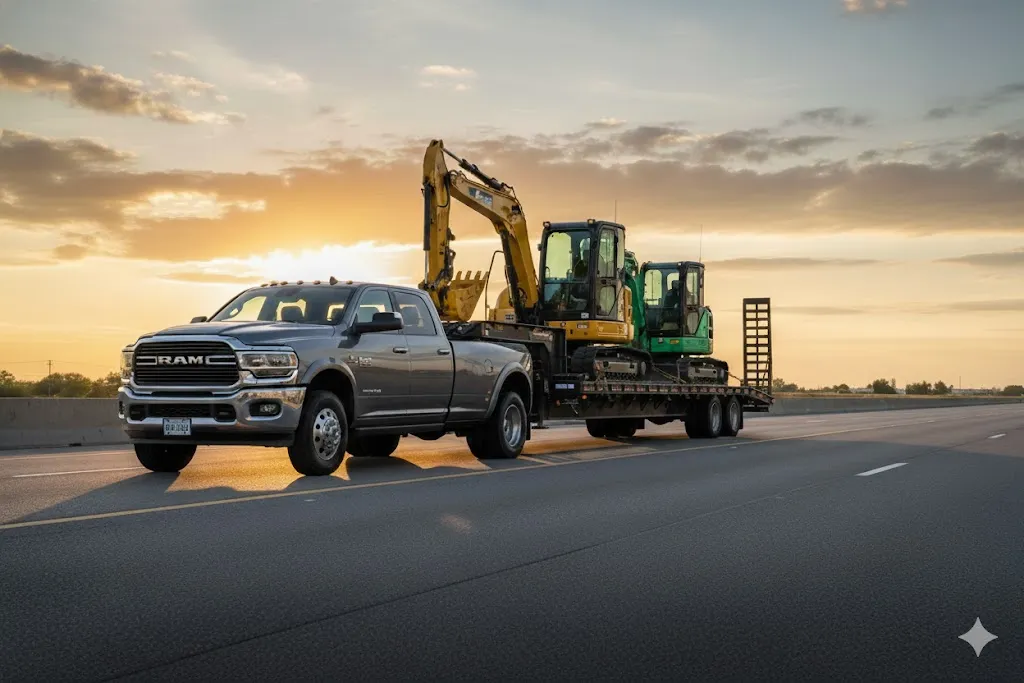
Have you ever white-knuckled your steering wheel while a loaded trailer fishtailed behind you? That heart-stopping sway is the moment many haulers decide they need a different solution—and fast. A gooseneck trailer connects to a ball mounted in the bed of your truck rather than to a rear bumper hitch. That single design choice profoundly alters stability, weight distribution, and overall capacity, especially for operators moving equipment or evaluating concession trailers for sale for mobile business use.
In this post, we’ll look at why gooseneck trailers have become the smart upgrade for anyone who moves serious weight, from skid steers to round bales. You’ll learn the benefits of a gooseneck trailer, see how it stacks up against bumper-pull designs, and walk away knowing if a gooseneck or bumper-pull setup best fits your day-to-day hauling needs. Read on!
Stability & Safety: Hitch Placement Makes the Difference
A gooseneck’s ball sits directly above—or just forward of—your truck’s rear axle. That position anchors the trailer’s mass closer to your vehicle’s center of gravity, minimizing leverage and sway.
Because the pivot point is inside the bed, wind gusts and passing semis have a harder time pushing your load off course. Your steering wheel feels solid, not spongy, and emergency lane changes become far less dramatic. If you’ve been wrestling with the “tail-wagging-the-dog” feeling, this alone can be reason enough to switch—especially when staying within safe tow capacity limits matters on every trip.
The design also improves braking stability. When you hit the brakes, weight transfers through the truck’s frame instead of tugging on the bumper. Add an equalizer hitch or a dual tandem axle setup, and stopping distances shrink even as gross weight increases. Less sway plus firmer braking equals safer highway miles for you, your crew, and the cargo you’re paid to protect.
Payload Capacity: Why Goosenecks Can Legally Haul More
You may have seen identical excavators loaded on two different trailers, but only one headed through a weigh station worry-free. That advantage traces back to how goosenecks handle Gross Vehicle Weight Rating. Below, we break down the mechanics that unlock higher numbers using practical trailer towing advice rooted in real-world hauling scenarios.
Hitch Geometry Raises the GVWR Ceiling
The tongue weight of a bumper-pull trailer is limited by the rating of your rear receiver and frame cross-members. In contrast, a gooseneck tongue weight presses straight down over the rear axle. By distributing force over a wider area of your truck’s strongest components, manufacturers can certify a much higher GVWR definition without redesigning the truck itself.
Weight Distribution Protects Axles and Tires
Because the hitch sits closer to the truck’s center, cargo weight spreads across both truck axles instead of overloading the rear. That balance reduces tire squat and keeps your drivetrain within safe operating specs. The result? You can load an extra pallet of concrete or that additional attachment without risking a roadside blowout.
Frame Construction Tailored for Heavy Payloads
Many goosenecks, especially those built by heavy haul trailer manufacturers, feature deeper I-beam frames, torque tubes, and pierced-beam decks. These elements control flex when you’re running near maximum gross weight. Pair that with a dual tandem trailer option, and you’re looking at genuine 30K-plus GVWR potential—numbers bumper-pulls can’t touch. For fleets that require consistent oversized loads, a dual tandem trailer certified by heavy haul trailer manufacturers can be the difference between one trip and two.
Maneuverability: Turning Tight Spaces Into Child’s Play
Conventional wisdom says longer trailers are harder to back, but a gooseneck bucks that trend. Because the pivot point sits 2-3 feet ahead of your rear bumper, you shorten the effective trailer length.
That geometry gives you a sharper turning radius. Need to snake between stacked rebar and a ditch on a jobsite? A gooseneck lets you jackknife more without crunching fenders. In town, curling into a single parking spot to pick up supplies becomes less of a three-point ballet and more of a decisive swing.
Backing is equally forgiving. Subtle steering inputs move the trailer quickly, yet predictably, reducing over-corrections. You’ll spend less time blocking the county road while lining up to the dock and more time loaded and rolling.
Cost & Maintenance: Upfront Investment vs. Long-Term Savings
While a gooseneck will set you back more than a comparable bumper-pull, ownership costs can balance out—or even beat—the cheaper option. Let’s unpack where the dollars go.
Initial Purchase and Setup
- Custom bed hitch installation adds labor and materials.
- Heavier frames and options like torque tubes or hydraulic dovetails boost sticker price.
- Insurance premiums may rise slightly because the trailer’s GVWR is higher.
Operating and Maintenance Economics
- Better weight distribution means fewer suspension and tire failures on the tow vehicle.
- Towing at lower RPMs due to improved aerodynamics can bump fuel economy by 5-10%.
- Resale values stay high because fleets favor the larger capacities goosenecks deliver, effectively lowering the total cost of ownership.
By year three, many owners find that reduced downtime and higher billing rates for heavier loads offset the initial hit to the wallet.
Popular Concerns: Sway, Capacity, and Backing
Even with clear advantages, you might still worry about control, legal loads, or simply mastering that first reverse. First, trailer sway is dramatically lower thanks to the forward hitch position and bed anchoring. Add quality tires and balanced cargo, and sideways oscillation all but disappears. Second, insufficient capacity becomes a thing of the past; the whole point is hauling more without exceeding axle ratings.
Finally, backing and tight turns intimidate newcomers, yet most drivers report a shorter learning curve than with conventional bumper-pulls. A quick afternoon in an empty lot can leave you feeling like a pro. Opting for a dual tandem axle configuration further alleviates any concerns about overloading or stability.
Still thinking about the first road test? Put 1,000 pounds up front, keep speeds reasonable, and practice gradual steering inputs. Your confidence will rise as fast as your payload.
Built to Haul Smarter: The Wagoneer Trailers Approach
Now you know that gooseneck trailers offer real advantages in stability, payload handling, and control when hauling serious weight. Those benefits don’t happen by accident—they start with thoughtful engineering, proper load planning, and a trailer built to handle demanding work from day one. When the design is right, every mile feels more controlled and every job runs smoother.
At Wagoneer Trailers, we focus on manufacturing trailers engineered for heavy-duty performance. Each build is designed around real hauling conditions, using high-tensile steel, precision-placed cross-members, and durable powder-coat finishes meant to hold up to long hours and tough environments. Connect with us to learn more.

Cameron Fitzgerald
Owner of Wagoneer Trailers since 2019. Combines 9+ years of transportation industry expertise with a focus on customizable trailer solutions and customer-centric financing.
