
You’ve picked the trailer. The size works, the cargo capacity looks good, and it fits the kind of hauling you plan to do.
Then another question shows up: Will your hitch actually handle the trailer?
Not every hitch receiver is built the same. Tow vehicles use different receiver sizes and hitch classes, each designed for a specific weight range. Choosing the wrong setup can affect towing stability, weight distribution, and overall safety.
Understanding different size hitch receivers, ball sizes, and hitch classes helps ensure your trailer and tow vehicle work together the way they should.
Why Hitch Receiver Size Matters
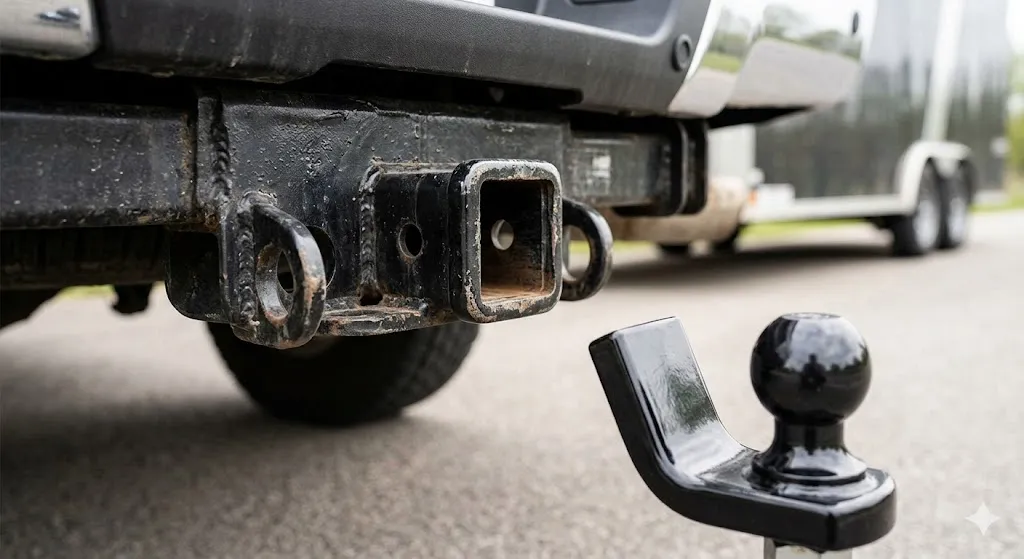
The hitch receiver is the square opening mounted to the frame of your tow vehicle. It holds the ball mount that connects to the trailer coupler.
Receiver size matters because it determines:
- The type of hitch accessories you can install
- The maximum towing capacity
- The stability of the trailer connection
There are several different size hitch receivers, and each one is designed for a specific towing range.
Using a receiver that’s too small for the trailer weight can lead to poor towing performance and increased stress on the vehicle.
The Most Common Hitch Receiver Sizes
Most vehicles use one of three standard receiver sizes.
1¼-Inch Receiver
This smaller receiver is common on cars, crossovers, and some compact SUVs. It’s typically used for light towing applications such as small cargo carriers or bike racks.
It may handle very small trailers but usually isn’t ideal for heavier hauling.
2-Inch Receiver
The 2-inch receiver is the most common size used for towing trailers. Many trucks and SUVs are equipped with this receiver because it supports a wide range of hitch accessories and trailer weights.
This size is commonly used for utility trailers, enclosed trailers, and equipment hauling.
2½-Inch Receiver
Heavy-duty pickup trucks sometimes use a larger 2½-inch receiver. This size is designed for higher towing capacities and is often used for large trailers or commercial hauling.
Adapters are sometimes used to connect smaller hitch mounts to larger receivers.
Understanding Hitch Classes and Weight Capacity
Receiver size is only one part of the equation. Hitch class ratings determine how much weight the hitch can safely handle.
A typical trailer hitch guide breaks hitch classes into several categories.
Class I and II
These hitches are designed for lighter loads. They are commonly found on smaller vehicles and are used for lightweight trailers or cargo carriers.
Class III
Class III hitches are widely used for towing mid-size trailers. Many SUVs and trucks with a 2-inch receiver fall into this category.
Class IV and V
These heavier hitch classes are designed for larger trailers and higher towing capacities. They are commonly used with pickup trucks and commercial towing setups.
Matching hitch class with trailer weight ensures the towing system can safely handle the load.
Choosing the Correct Ball and Hitch Size
The hitch receiver connects the trailer to the vehicle through a ball mount and coupler.
That’s why hitch and ball sizes must match the trailer coupler correctly.
The most common ball hitch sizes include:
- 1⅞-inch ball
- 2-inch ball
- 2 5⁄16-inch ball
Each trailer coupler is built for a specific ball size. Using the wrong ball size can cause the trailer to disconnect or sit improperly on the hitch.
Before towing, confirm that the ball size matches the coupler rating printed on the trailer.
Matching Your Hitch Setup to the Trailer
When selecting a hitch configuration, consider three key factors:
- Trailer weight
- Trailer coupler size
- Vehicle towing capacity
A proper trailer hitch guide helps ensure the receiver size, hitch class, and ball size all work together. This combination keeps the trailer stable on the road and allows braking and steering systems to function properly.
When the hitch setup is matched correctly, towing becomes smoother and more predictable.
Wagoneer Trailers: Helping You Tow With Confidence
Choosing the right hitch setup is just as important as choosing the right trailer. Receiver size, hitch class, and ball configuration all affect how safely a trailer performs on the road.
At Wagoneer Trailers, we help customers across Georgia choose enclosed trailers designed for dependable hauling and proper towing compatibility. Our team can guide you through trailer sizes, hitch requirements, and setup options so your towing system works exactly the way it should.
If you’re selecting a trailer and want to ensure your towing setup is ready for the job, we’re here to help.

Cameron Fitzgerald
Owner of Wagoneer Trailers since 2019. Combines 9+ years of transportation industry expertise with a focus on customizable trailer solutions and customer-centric financing.
