
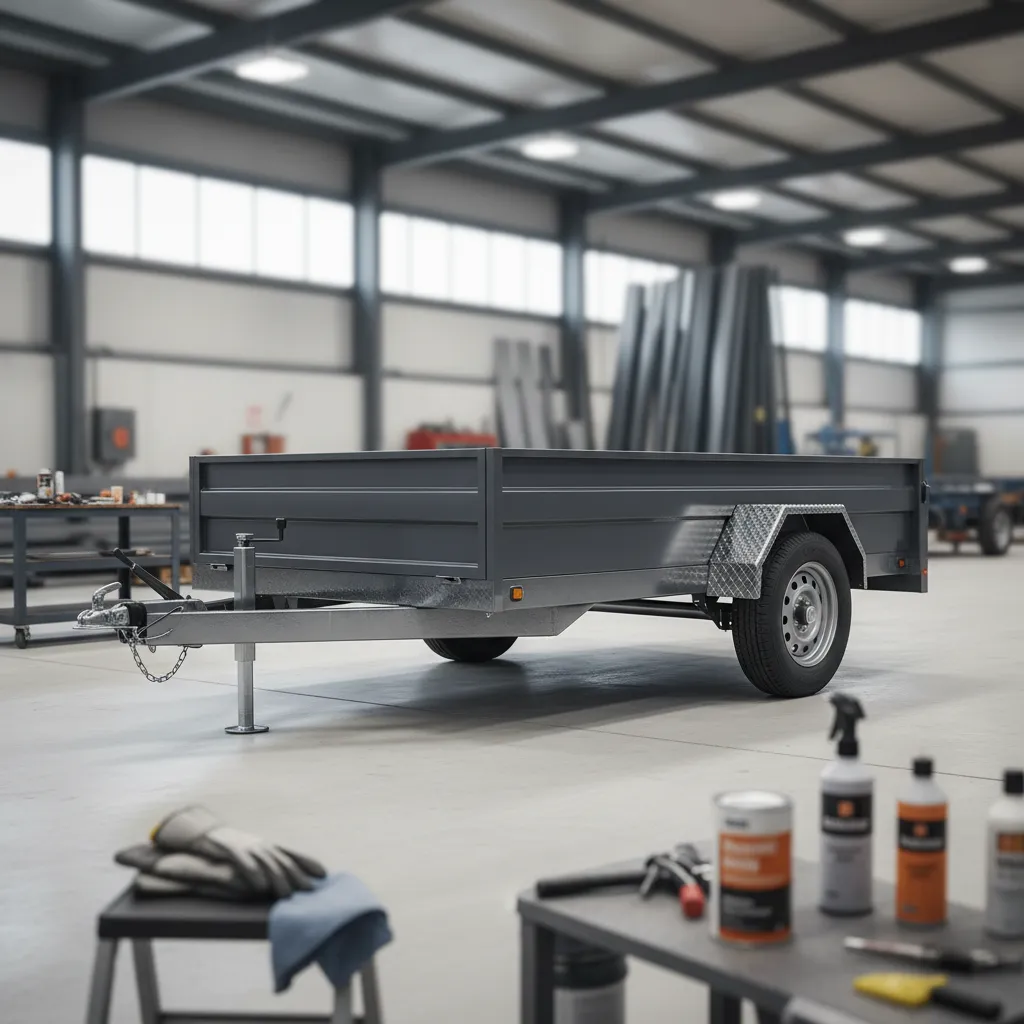
Rust rarely announces itself.
It starts somewhere easy to overlook: beneath the trailer, around a chipped section of coating, near hardware, or in an area where water and road grime keep collecting. By the time that little orange spot becomes obvious, corrosion may have been working for a while.
That’s why trailer rust prevention is less about reacting to rust and more about making your trailer a difficult place for it to get started.
If you own a steel trailer, there are a few areas worth paying closer attention to.
Underneath the Trailer: Where Road Grime Likes to Stay
The underside gets the less glamorous side of trailer ownership.
Water, mud, road debris, and grime can all reach the frame while you’re towing. And unlike the exterior walls, the underside isn’t something you’re likely to stare at every time you walk past the trailer.
That makes it an important place to watch for trailer frame rust.
Keeping the underside reasonably clean, particularly after traveling through muddy or salty conditions, can help prevent corrosive material from sitting against steel surfaces longer than necessary.
You don’t need to obsess over every speck of dirt. You just don’t want months of buildup becoming part of the trailer.
Around Scratches: Small Damage Can Create a Bigger Opening
Steel trailers are built to work, which means bumps and scratches happen.
Equipment gets loaded. Tools make contact with surfaces. Road debris gets kicked up. A small chip might not seem important at first, but damaged protective coatings can leave the steel underneath more exposed to moisture.
If you’re wondering how to prevent trailer rust, catching those areas early is one of the simplest places to start.
Inspect painted or coated steel periodically and follow the trailer or coating manufacturer’s recommendations for addressing damaged areas.
A tiny scratch is usually much easier to deal with than corrosion that’s had a few seasons to spread.
Near Joints and Hardware: Check the Places Water Can Hang Around
Flat, visible surfaces are easy to inspect.
Corners, joints, seams, fasteners, and other tighter spaces? Not so much.
These areas deserve attention because moisture and debris can collect where they’re harder to notice. When washing or inspecting the trailer, take an extra look around those less-visible sections instead of focusing only on the parts that are easiest to reach.
With steel trailer rust, the boring little corners are often worth checking.
Not exactly exciting weekend plans, but neither is discovering corrosion later.
Inside the Trailer: Yes, Rust Can Start Here Too
An enclosed trailer protects cargo from the elements, but that doesn’t mean the interior is automatically moisture-free.
Wet equipment, muddy machines, damp gear, or water tracked inside can introduce moisture. If the trailer stays closed afterward, that moisture may linger.
Let wet equipment dry appropriately before long storage periods, clean up standing water, and pay attention to any signs that water is getting inside where it shouldn’t.
This matters especially for trailers that carry landscaping equipment, ATVs, motorcycles, or other gear that regularly comes home dirty or wet.
Where the Trailer Is Parked Matters, Too
Rust prevention doesn’t stop when you unhitch.
A trailer that spends long periods sitting in wet grass, mud, or an area with poor drainage is dealing with a very different environment from one parked on a stable, well-drained surface.
If covered storage is available, it can provide additional protection from the elements. If it isn’t, choosing a good parking location and periodically checking the trailer becomes even more important.
And don’t assume a trailer that’s parked isn’t changing.
The weather doesn’t care whether you’re towing.
The Real Trick? Don’t Give Rust Months to Work Unnoticed
You don’t need an elaborate routine to stay ahead of corrosion.
Cleaning off buildup, paying attention to coating damage, keeping the trailer reasonably dry, and inspecting steel areas periodically can go a long way toward trailer rust prevention.
Most importantly, don’t wait until rust becomes impossible to miss.
If you notice corrosion or damage that may affect the trailer’s structure or safe operation, have it evaluated by an appropriate professional. Catching a problem early gives you more options than discovering it when you’re ready to load up and leave.
Start With a Trailer Built for the Work With Wagoneer Trailers
At Wagoneer Trailers, we help customers across Georgia find durable enclosed trailers for commercial work, equipment hauling, recreation, and everyday transportation. With customizable builds, flexible financing, and direct delivery available, we make it easier to choose a trailer that fits what you need to haul.
FIND YOUR ENCLOSED TRAILER TODAY!

Cameron Fitzgerald
Owner of Wagoneer Trailers since 2019. Combines 9+ years of transportation industry expertise with a focus on customizable trailer solutions and customer-centric financing.
