
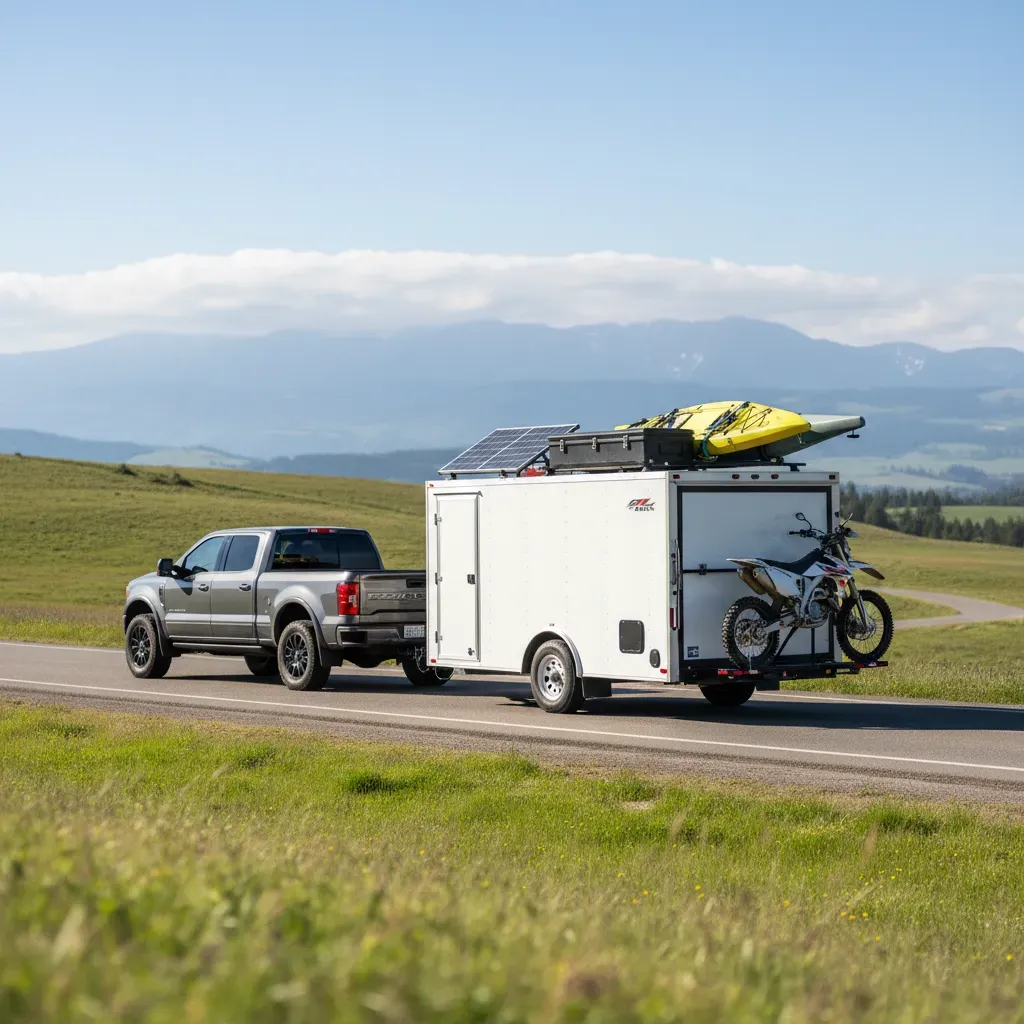
Customizing a trailer is exciting.
You start with the basics, then begin imagining everything that could make it work better. Extra cabinets. Interior shelving. A generator. Toolboxes. An upgraded floor. Maybe additional lighting or a spare tire carrier.
Individually, none of those upgrades seem like a big deal.
Together, they can change one of the most important numbers your trailer has: its trailer payload capacity.
That doesn’t mean you should avoid upgrades. It simply means every add-on becomes part of the trailer’s total weight, which affects how much cargo you can safely haul afterward.
Before adding features to your trailer, it’s worth understanding what you’re really gaining—and what you’re giving up.
Customization Always Comes With a Trade-Off
Adding equipment to a trailer usually improves its functionality.
Storage makes organization easier. Reinforced flooring supports heavier equipment. Interior lighting makes loading more convenient. A generator can transform a basic trailer into a mobile workspace.
Those upgrades add value.
They also add weight.
The important thing to remember is that every pound added to the trailer itself is one less pound available for cargo. That’s why customization isn’t simply about choosing features—it’s about finding the right balance between convenience and hauling capability.
Not All Add-Ons Affect Capacity the Same Way
Some upgrades have very little impact on overall weight.
Others can significantly reduce your available cargo trailer payload, especially when several are installed together.
For example, interior shelving or additional tie-down systems may only have a modest effect. Larger additions like cabinets, generators, water tanks, reinforced workstations, or heavy-duty flooring can have a much greater influence on how much equipment the trailer can safely carry.
This doesn’t make those upgrades a bad investment. It simply means they should be part of your planning from the beginning.
Think About What You Carry Every Week
It’s easy to focus on everything you’d like to add to the trailer.
Instead, start with a different question:
What spends the most time inside it?
If you’re hauling landscaping equipment every day, maintaining as much trailer payload capacity as possible may be the priority.
If you’re building a concession trailer or mobile workshop, the built-in equipment becomes part of the trailer’s purpose, even if it reduces available cargo capacity.
The answer depends less on the trailer itself and more on how you earn a living, travel, or use the trailer week after week.
The Goal Isn’t Maximum Capacity—It’s the Right Capacity
There’s a common assumption that the highest trailer weight capacity is always the best option.
Not necessarily.
A trailer with more capacity than you’ll ever use may simply be larger, heavier, and less practical than necessary. On the other hand, a trailer that’s filled to its limits every trip leaves very little flexibility as your needs change.
The better approach is choosing a trailer that comfortably supports both your cargo and the features that make your work easier.
That’s where thoughtful planning pays off.
Before You Start Adding Upgrades
Customizing a trailer is one of the biggest advantages of buying an enclosed trailer. A little planning beforehand can help ensure those upgrades improve the trailer without limiting what it can do later.
1. Prioritize the Features You’ll Use Every Day
It’s easy to get excited about optional upgrades, but the best investments are usually the ones that make loading, organizing, and working easier every time you use the trailer.
2. Think Beyond Today’s Workload
Many owners eventually carry more equipment than they originally expected. Leaving some room in your available payload gives you flexibility as your business or hobbies grow.
3. Ask How Each Upgrade Affects Capacity
Every trailer is different. Before adding major accessories, ask how they’ll affect the trailer’s available cargo capacity so there are no surprises after the build is complete.
A Well-Planned Trailer Usually Performs Better Than an Overbuilt One
The best trailers aren’t necessarily the ones with the most accessories.
They’re the ones where every feature has a purpose.
When storage, lighting, flooring, workstations, and other trailer add ons are selected with payload in mind, the trailer stays balanced, practical, and ready for the work ahead.
That’s a much better outcome than simply checking every option on a list.
Wagoneer Trailers: Helping You Customize Without Compromising Performance
At Wagoneer Trailers, we believe customization should improve the way you work—not reduce the capabilities you need most. That’s why we help customers across Georgia build enclosed trailers that balance useful upgrades with real-world hauling performance.
Whether you’re designing a contractor trailer, a mobile business, or a trailer for recreational equipment, we’ll help you choose options that support your workflow while keeping trailer weight capacity and long-term usability in mind.

Cameron Fitzgerald
Owner of Wagoneer Trailers since 2019. Combines 9+ years of transportation industry expertise with a focus on customizable trailer solutions and customer-centric financing.
