
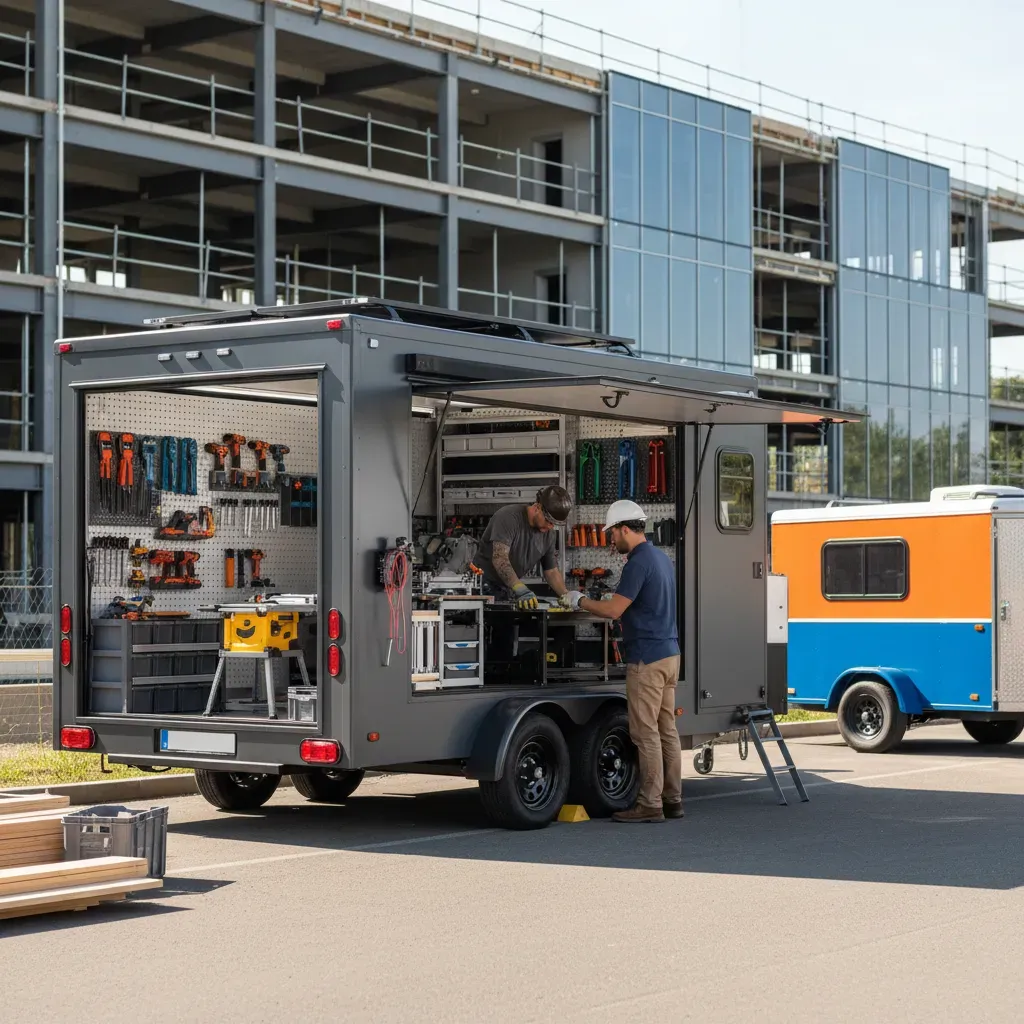
The best workshop isn’t always inside a building.
For many contractors and DIYers, it’s parked in the driveway, sitting at a jobsite, or traveling to the next project.
A well-designed mobile workshop trailer does more than transport tools. It creates a workspace that’s organized, efficient, and ready the moment the doors open. Instead of wasting time searching for equipment or making extra trips back to the shop, everything has a place—and every job starts a little smoother.
So, if you’re thinking about turning an enclosed trailer into a workshop, here’s one way to think about the layout.
Start at the Front: Create a Home for Your Largest Equipment
The front of the trailer is usually the best place for items that stay inside most of the time.
Generators, compressors, larger tool chests, and equipment that isn’t used on every stop can be secured here without getting in the way of your daily workflow.
Keeping heavier equipment toward the front also helps maintain better weight distribution, making the trailer feel more balanced while towing.
Rather than treating the front as leftover space, think of it as the trailer’s foundation.
Move to the Walls: Turn Empty Space Into Storage
The walls are where an enclosed trailer workshop really begins to take shape.
Shelving, cabinets, E-track systems, hooks, and vertical storage can dramatically increase how much the trailer holds without reducing valuable floor space.
The goal isn’t to fill every inch with storage.
It’s to create a place where every tool has a logical home. When you know exactly where something belongs, loading and unloading become faster, and the trailer stays organized between jobs.
Leave the Center Open
One of the biggest mistakes people make is adding too much.
A trailer packed wall to wall with cabinets might look impressive, but it quickly becomes difficult to move around inside.
The center aisle should remain open enough to roll equipment, carry materials, or simply walk comfortably through the trailer.
That open space often becomes the most valuable part of the entire layout because it allows everything else to work together.
Think About the End of the Day
Most workshop trailers are designed around arriving at the job.
It’s just as important to think about leaving it.
After a long day, tools don’t always go back exactly where they came from. Batteries need charging. Extension cords need winding. Dirty equipment needs somewhere to sit until it’s cleaned.
Planning for those moments makes the trailer easier to maintain over time.
Simple additions like charging stations, dedicated bins, or a small work surface can make cleanup faster and help the trailer stay organized from one project to the next.
Build a Setup That Can Grow With You
The first version of your trailer probably won’t be the last.
As your business grows or your projects become more complex, your storage needs will change. New tools, different equipment, and changing workflows all influence how the trailer functions.
That’s why the best contractor trailer setup isn’t necessarily the one with the most cabinets.
It’s the one that gives you flexibility.
Modular shelving, adjustable track systems, and removable storage make it easier to adapt the trailer instead of rebuilding it every few years.
Organization Is What Makes the Trailer Feel Professional
Two trailers can carry the exact same tools and still feel completely different.
In one, everything is stacked wherever it fits.
In the other, every item has a dedicated place.
That’s the difference good tool trailer organization makes. It reduces wasted time, protects expensive equipment, and helps every job start with less frustration.
A mobile workshop should help you work more efficiently—not make you spend the first twenty minutes looking for the right tool.
Wagoneer Trailers: Build a Workshop That Works Wherever the Job Takes You
At Wagoneer Trailers, we help contractors, tradespeople, and DIYers create enclosed trailers that are built around the way they work. Whether you’re starting with a blank trailer or planning a fully customized workshop, we’ll help you choose the layout, storage solutions, and upgrades that fit your daily routine.
From shelving and E-track systems to lighting and custom interiors, we’ll help you build a trailer that’s more than transportation—it’s a workspace designed to keep up with your business.

Cameron Fitzgerald
Owner of Wagoneer Trailers since 2019. Combines 9+ years of transportation industry expertise with a focus on customizable trailer solutions and customer-centric financing.
