
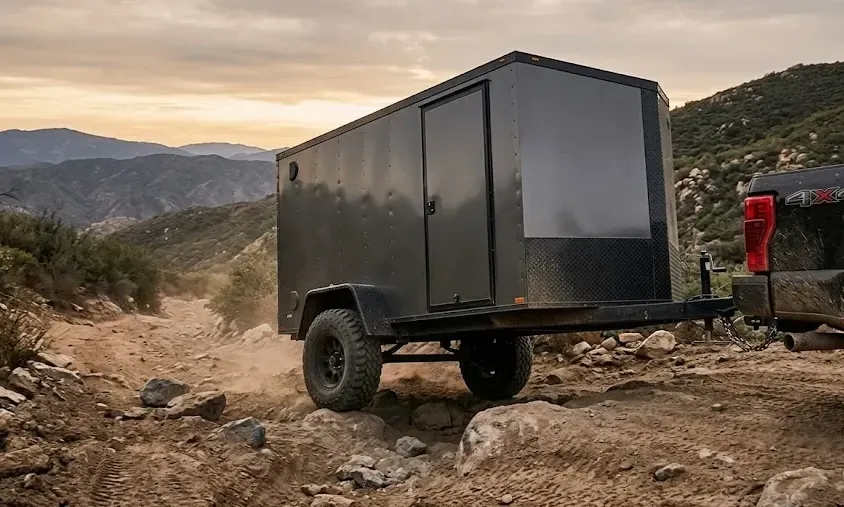
Some trailers are built for smooth pavement, short trips, and easy parking lots.
An off-road trailer has a different job.
It has to handle rougher terrain, uneven ground, gravel roads, job sites, trails, and places where a standard trailer may start feeling out of its element fast. That doesn’t mean every trailer needs to look like an expedition rig. But if you’re planning to haul gear or equipment beyond clean pavement, the details matter.
Choosing the right off-road cargo trailer comes down to more than size. It’s about strength, clearance, suspension, tires, and how well the trailer protects what’s inside when the road gets rough.
Off-Road Use Starts With Stronger Construction
The frame is where everything begins.
An off-road trailer needs a structure that can handle vibration, bumps, twisting, and repeated movement over uneven ground. A lighter-duty trailer may work well on highways, but rough surfaces put extra stress on the frame, floor, walls, and axle setup.
That’s why build quality matters so much when comparing off-road options. You want a trailer that feels solid, not one that rattles apart after a few rough trips.
For an off-road enclosed cargo trailer, the enclosed body also needs to stay tight and secure. Doors, hinges, seals, and panels all matter because dust, moisture, and road debris are much harder to avoid off pavement.
Ground Clearance Changes Everything
A trailer that sits too low can become a problem quickly.
On rough terrain, low clearance increases the risk of scraping the frame, dragging the rear, or hitting rocks, ruts, and uneven ground. Better ground clearance gives the trailer more room to move without making contact underneath.
This is especially important if you’re towing through job sites, farms, gravel roads, hunting land, or uneven property. Even if you’re not doing extreme trail driving, extra clearance can make the trailer feel much more capable.
An enclosed trailer off road setup should give you enough height to handle uneven ground while still staying stable behind the tow vehicle.
Suspension Makes the Ride More Manageable
Suspension affects how the trailer responds to bumps and road movement.
A rough-riding trailer can shake cargo, strain components, and make towing feel less controlled. A better suspension setup helps absorb impact and keeps the trailer tracking more smoothly.
For off-road use, suspension should be matched to the kind of hauling you plan to do. A trailer carrying tools, camping gear, equipment, or business supplies needs enough support to handle weight without bouncing excessively.
The goal isn’t only comfort. It’s cargo protection, stability, and long-term durability.
Tires Need to Match the Terrain
Tires are easy to overlook until the road gets rough.
Standard trailer tires may work well on pavement, but off-road hauling calls for stronger traction and better durability. Tire size, tread pattern, and load rating all affect how confidently the trailer moves over gravel, dirt, mud, or uneven ground.
A good off road cargo trailer should have tires that match both the terrain and the trailer’s weight rating. Undersized or poorly matched tires can reduce control and increase wear over time.
Think of tires as part of the trailer’s foundation. If they aren’t right, the rest of the setup has to work harder.
Interior Protection Still Matters
Off-road hauling isn’t only about what happens underneath the trailer.
The inside matters too.
When the trailer moves over rough ground, cargo can shift faster than expected. Tie-down points, wall storage, shelving, and floor strength all help keep equipment secure during transport.
If you’re carrying tools, outdoor gear, supplies, or commercial equipment, interior organization becomes part of safety. A strong enclosed body protects cargo from weather, but smart interior setup protects it from movement.
That’s where an off road enclosed cargo trailer can be especially useful. You get weather protection and controlled storage in one setup.
The Best Off-Road Trailer Fits the Way You Actually Use It
Not every buyer needs the same off-road setup.
Someone hauling camping gear on gravel roads needs something different than a contractor pulling equipment through rough job sites. A trailer for weekend adventure use may focus on storage, clearance, and protection. A trailer for work may need stronger flooring, easier loading, and better interior organization.
Before choosing one, think about where the trailer will go most often. Smooth dirt roads? Uneven property? Job sites? Remote areas?
That answer usually tells you which features matter most.
Wagoneer Trailers: Helping You Build a Trailer Ready for Real Roads
At Wagoneer Trailers, we help customers across Georgia choose enclosed trailers that fit the way they actually haul. For off-road use, that means looking beyond basic size and focusing on frame strength, ground clearance, axle setup, tire choice, and interior protection.
We sell durable enclosed trailers with customizable options for personal, commercial, and specialty hauling needs. Whether you need an enclosed trailer off road setup for work, recreation, or equipment transport, we can help you find a build that feels ready for the terrain ahead.
GET A TRAILER BUILT FOR MORE THAN PAVEMENT

Cameron Fitzgerald
Owner of Wagoneer Trailers since 2019. Combines 9+ years of transportation industry expertise with a focus on customizable trailer solutions and customer-centric financing.
