
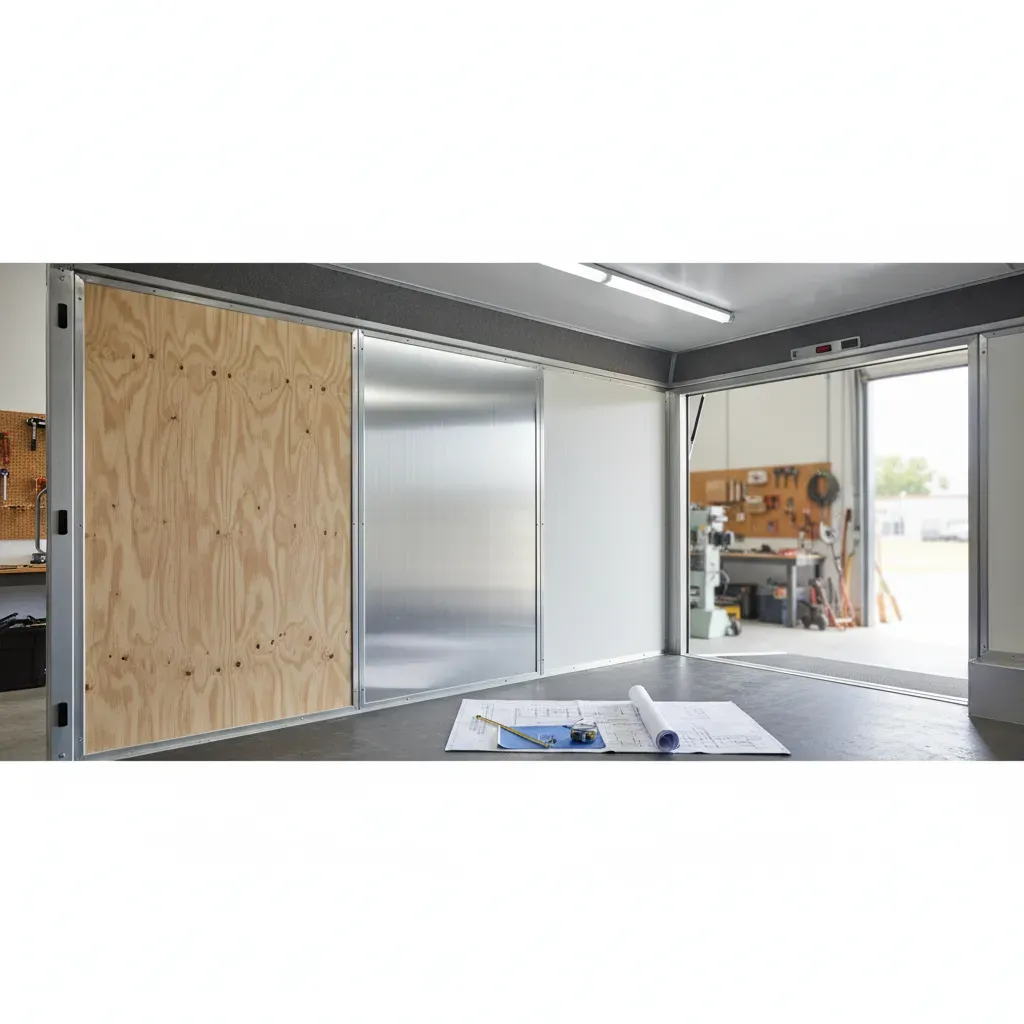
When people shop for an enclosed trailer, they usually compare the big things first.
Size. Axles. Doors. Weight capacity.
Then, somewhere along the way, someone asks, “What are the interior walls made of?”
It sounds like a small detail—until you realize you’ll be looking at those walls every time you load equipment, install shelving, secure cargo, or clean the trailer.
The truth is, there isn’t one material that’s right for everyone. The best choice depends on how you’ll use the trailer, how much wear it will see, and whether you’re prioritizing durability, appearance, or easy maintenance.
Here’s how the most common enclosed trailer wall materials compare.
If Your Trailer Had to Pick a Personality…
Think of interior wall materials as different personalities.
Some are tough and practical. Others are lightweight and clean-looking. Some offer a little of both.
Understanding what each material does well makes it much easier to decide which one belongs in your trailer.
Plywood Walls: Built for Everyday Work
Walk into many enclosed trailers, and you’ll probably see plywood.
There’s a reason it’s so common.
Cargo trailer plywood walls are durable, easy to modify, and strong enough to support accessories like shelving, cabinets, tool racks, or E-track systems. If you’re planning to customize the trailer over time, plywood gives you plenty of flexibility because it’s simple to drill into and reinforce.
It also handles the bumps and vibrations of everyday hauling well, making it a popular option for contractors, landscapers, and business owners who use their trailers regularly.
The trade-off is appearance. Plywood has a more utilitarian look than other materials and may require occasional sealing or maintenance depending on how the trailer is used.
Aluminum Walls: Clean, Modern, and Low Maintenance
If plywood is the workhorse, aluminum is the low-maintenance option.
Aluminum trailer walls create a clean interior that’s resistant to moisture and easy to wipe down after hauling equipment or supplies. They’re especially popular in trailers that transport products, motorcycles, recreational equipment, or cargo that benefits from a cleaner environment.
Another advantage is weight. Aluminum panels are generally lighter than wood, which may help reduce the trailer’s overall weight depending on the build.
The downside?
They’re not always as convenient if you plan to mount shelves or heavy accessories directly to the walls. Additional reinforcement may be needed for certain upgrades.
Vinyl Walls: Designed for Easy Cleanup
Vinyl-finished walls often appeal to buyers who value appearance just as much as function.
Instead of exposed wood grain or metal panels, vinyl creates a brighter, smoother interior that’s simple to clean after each trip.
This makes vinyl a popular choice for concession trailers, mobile businesses, and trailers that carry products where presentation matters.
While vinyl is easy to maintain, it’s important to remember that the finish itself isn’t what provides structural strength. The material underneath still plays an important role in how the wall performs over time.
So… Which Material Makes the Most Sense?
Interestingly, the answer has less to do with the trailer itself and more to do with what happens inside it.
If you’re building a mobile workshop, plywood often makes future upgrades much easier.
If easy cleaning is the priority, aluminum or vinyl may save time.
If appearance matters because customers regularly step inside the trailer, a finished wall may create a more polished impression.
The best interior isn’t necessarily the most expensive one.
It’s the one that supports the way you’ll actually use the trailer every week.
Before You Decide, Ask Yourself These Questions
Choosing between different trailer interior walls becomes much easier once you think about your long-term plans.
Will You Be Adding Shelving or Accessories?
If you expect to install storage, cabinets, or tie-down systems, choose wall materials that make future modifications easier.
How Important Is Easy Maintenance?
Some interiors only need occasional sweeping, while others benefit from smooth surfaces that wipe clean after every use.
Who Will Be Inside the Trailer?
If customers, employees, or clients regularly enter the trailer, appearance may become just as important as durability.
Wagoneer Trailers: Helping You Build the Right Trailer From the Inside Out
At Wagoneer Trailers, we know that the inside of a trailer matters just as much as the outside. The right wall material can improve organization, simplify maintenance, and help your trailer stay functional for years to come.
That’s why we work with customers across Georgia to customize enclosed trailers around the way they’ll actually be used. Whether you need a hardworking trailer for daily hauling or a polished interior for your business, we’ll help you choose features that support your goals—not just today, but long after you leave the lot.

Cameron Fitzgerald
Owner of Wagoneer Trailers since 2019. Combines 9+ years of transportation industry expertise with a focus on customizable trailer solutions and customer-centric financing.
