
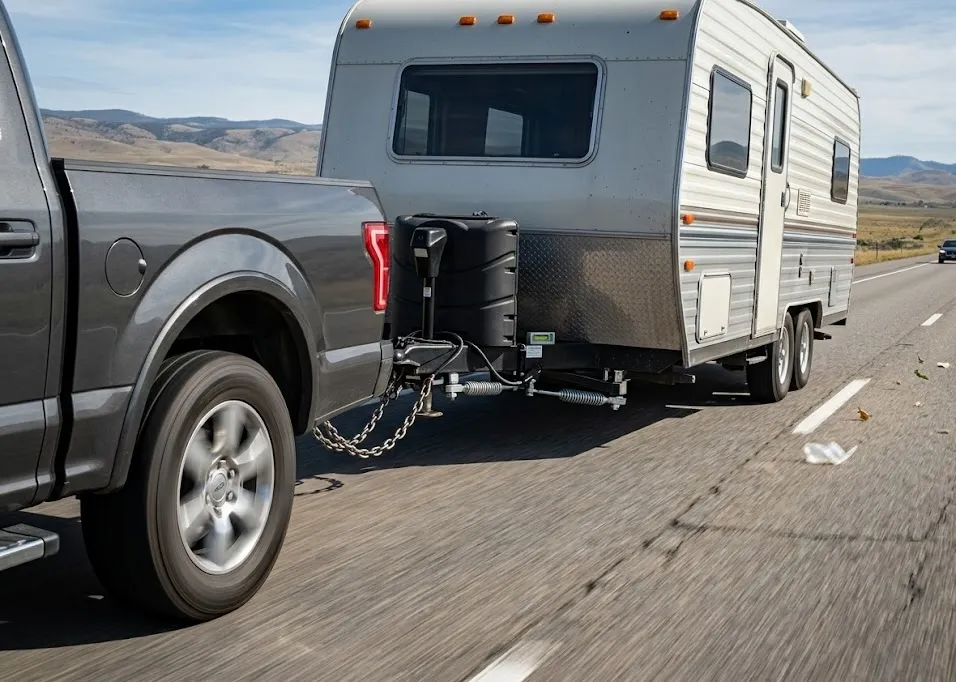
Everything feels fine—until it doesn’t. You’re driving, the road opens up, and suddenly the trailer starts to move side to side. Not aggressively at first, just enough to make you grip the wheel a little tighter. That’s trailer sway, and once it starts, it can escalate quickly if you’re not prepared.
The good news is that most sway issues are preventable. With the right setup, loading habits, and driving approach, you can stay in control and avoid that uneasy feeling altogether.
Let’s break down what actually causes sway—and how to stop it before it starts.
What Causes Trailer Sway in the First Place?
Trailer sway happens when the trailer begins to move independently from the tow vehicle. Instead of tracking straight behind you, it starts shifting left and right.
This usually comes down to a few key factors:
- Poor weight distribution
- Not enough tongue weight
- Driving too fast for conditions
- Sudden steering or braking
- Wind or passing vehicles
Even smaller setups aren’t immune. In fact, small trailer sway control becomes even more important with lighter trailers because they react more quickly to road conditions.
Understanding these causes is the first step to learning how to prevent trailer sway.
Why Loading Matters More Than You Think
Before you even hit the road, your loading setup determines how stable your trailer will feel.
Weight distribution plays a major role. If too much weight sits toward the rear of the trailer, it can act like a lever and pull the trailer side to side.
Ideally, about 10–15% of the total trailer weight should rest on the hitch. This creates enough forward pressure (tongue weight) to keep the trailer aligned behind your vehicle.
Balanced loading doesn’t just improve stability—it makes controlling the trailer sway much easier if conditions change while driving.
Driving Habits That Help Keep Things Steady
Even with a properly loaded trailer, driving style still matters.
Speed is one of the biggest factors. The faster you go, the more sensitive the trailer becomes to movement. Wind, road curves, and passing vehicles all have a greater effect at higher speeds.
Smooth inputs also make a difference. Gradual acceleration, steady braking, and controlled steering help keep the trailer tracking straight.
If sway begins, avoid sudden corrections. Instead, ease off the accelerator and let the vehicle slow down naturally while keeping the steering wheel steady.
A Quick Check That’s Often Overlooked
Brakes don’t just stop your trailer—they help stabilize it.
If you’re not sure how you can test the trailer emergency brakes, it’s worth doing a quick check before every trip. This usually involves activating the breakaway system to confirm that the trailer brakes engage properly.
When trailer brakes respond correctly, they help reduce forward push and improve control during sudden stops or sway situations.
It’s a small step that adds a lot of confidence before you get on the road.
Practical Tips to Prevent Trailer Sway
Trailer sway often starts with small setup issues that go unnoticed. A few consistent habits can make a big difference in keeping your trailer stable on the road.
Here’s how you can reduce the risk of sway and improve overall control:
- Balance your load correctly. Keep heavier items toward the front half of the trailer to maintain proper tongue weight. When weight is distributed evenly, the trailer tracks more predictably and becomes easier to manage at higher speeds.
- Check your tire pressure before every trip. Tires that are underinflated or uneven can affect how the trailer responds to the road. Proper inflation helps maintain stability and improves how the trailer handles turns and bumps.
- Use sway control equipment when needed. Some setups benefit from additional sway control systems, especially when towing at highway speeds or in windy conditions. These systems help limit side-to-side movement and improve control.
- Inspect your hitch and connections. A secure connection between the vehicle and trailer is essential. Make sure the coupler is properly locked, safety chains are attached, and everything is tightened before driving.
- Test your trailer brakes regularly. Knowing how you can test the trailer emergency brakes is part of safe towing. Confirming that your brakes respond properly helps you stay in control if sway begins or if you need to stop quickly.
Building these habits into your routine makes controlling trailer sway much easier—and helps you stay ahead of problems before they start.
Stay Ahead of Sway Before It Starts
Sway doesn’t usually come out of nowhere—it builds from small issues that add up.
When your trailer is loaded correctly, your equipment is checked, and your driving stays controlled, you reduce the chances of sway happening in the first place.
Learning how to prevent trailer swaying isn’t about reacting in the moment—it’s about setting things up the right way from the start.
Wagoneer Trailers: Built for Stable, Confident Towing
A stable towing experience starts with the trailer itself.
At Wagoneer Trailers, we design and sell enclosed trailers across Georgia with balance, durability, and real-world use in mind. From frame design to axle placement, our trailers are built to support smoother towing and better weight distribution from the ground up.
We don’t just focus on selling trailers—we help you understand how to use them safely and effectively, whether you’re hauling equipment, vehicles, or business cargo.
If you’re ready for a trailer that feels solid behind your vehicle—not something you have to second guess—we’re here to help.

Cameron Fitzgerald
Owner of Wagoneer Trailers since 2019. Combines 9+ years of transportation industry expertise with a focus on customizable trailer solutions and customer-centric financing.
