
Most trailer tire problems don’t start with a blowout.
They start quietly.
A little extra bouncing on the highway. Uneven tread wear you barely notice at first. A trailer that suddenly feels heavier to tow than usual. In a lot of cases, the issue comes down to something surprisingly simple: tire pressure.
And yet, many trailer owners only check their tires when something already feels wrong.
The reality is that proper tire pressure affects almost everything about how your trailer performs—handling, braking, tire life, fuel efficiency, and overall stability on the road. Whether you’re hauling equipment, tools, or commercial cargo, understanding the right PSI helps your trailer work the way it’s supposed to.
There’s No One “Perfect” PSI for Every Trailer
This is where things get confusing for a lot of people.
Someone says all trailer tires should be inflated to the maximum number listed on the sidewall. Someone else says lower pressure gives a smoother ride. Neither answer tells the whole story.
The correct trailer tire pressure depends on:
- Trailer size
- Tire rating
- Cargo weight
- Road conditions
- How often the trailer is used
For example, an empty utility trailer and a fully loaded enclosed trailer place completely different demands on the tires.
That’s why checking your actual setup matters more than relying on generic numbers.
What Happens When Tire Pressure Is Too Low?
Low pressure creates more problems than most people expect.
When trailer tires don’t have enough air, the sidewalls flex more as the tire rolls. That extra movement creates heat, especially during longer highway trips.
Over time, low PSI can lead to:
- Uneven tread wear
- Poor fuel efficiency
- Reduced load support
- Increased blowout risk
Low pressure also changes how the trailer feels while towing. The trailer may sway more, feel sluggish during turns, or bounce unevenly over rough pavement.
Even being a few PSI below the recommended range can affect performance.
Too Much Air Isn’t Great Either
Overinflated tires come with their own problems.
Excessively high trailer tire PSI reduces the tire’s contact with the road surface. Instead of absorbing bumps naturally, the tire becomes stiffer and transfers more vibration into the trailer.
That can lead to:
- Harsher ride quality
- Faster center tread wear
- Reduced traction on uneven roads
For enclosed trailers carrying sensitive equipment or inventory, excessive pressure can also increase vibration inside the trailer itself.
The goal isn’t maximum pressure—it’s proper pressure.
Why Enclosed Trailers Usually Need Closer Attention
Weight changes everything.
A lightweight open trailer may not place much stress on the tires, but enclosed trailers are different. Tools, equipment, shelving, inventory, or vehicles all add consistent load pressure.
Because of that, enclosed trailer tire pressure often needs more regular monitoring.
The heavier the trailer becomes, the more important proper inflation gets. Tires support the entire load while managing heat and road impact at highway speeds.
Ignoring PSI on a loaded enclosed trailer usually catches up eventually.
So… How Much Air Should Be in Trailer Tires?
The easiest place to start is the tire sidewall.
Manufacturers print recommended load and pressure information directly on the tire. That rating tells you how much air the tire needs to safely carry its intended load.
If you’ve wondered how much air should be in trailer tires, the answer usually falls somewhere between 50 and 80 PSI for many common trailer setups—but the exact number depends on the tire itself.
And that’s important: trailer tires are not all built the same.
Checking the manufacturer recommendations for both the tire and trailer gives you the most accurate answer.
A Quick Reality Check Most Owners Skip
Here’s something a lot of people don’t realize:
Trailer tires can lose pressure slowly over time without looking flat.
Unlike vehicle tires, trailer tires often maintain their shape visually even when PSI drops below the recommended level. That’s why relying on appearance alone usually doesn’t work.
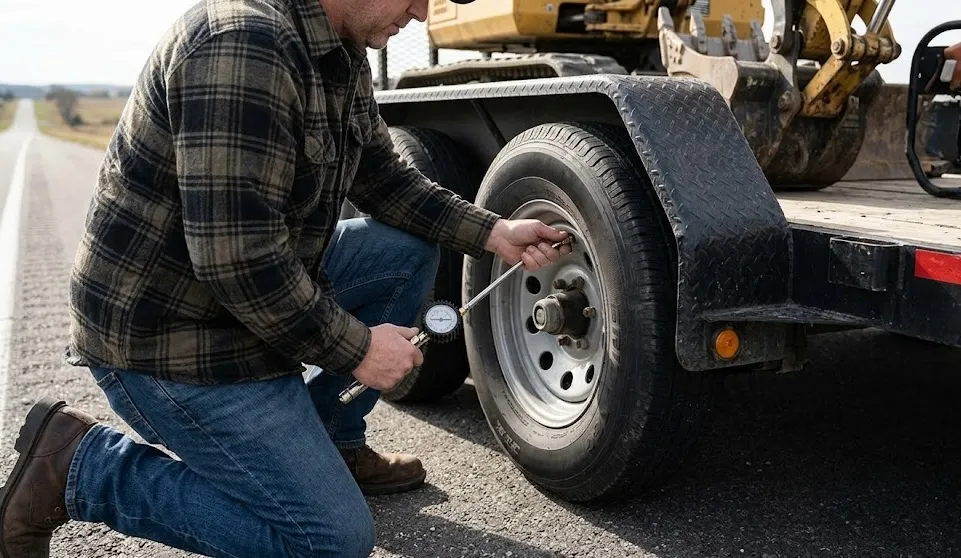
A tire gauge tells you more in 10 seconds than a visual inspection does in five minutes.
What Smart Trailer Owners Usually Do Consistently
Most long-term tire issues come from small habits being ignored—not major mechanical failures.
People who avoid tire problems usually stay consistent with a few basic routines.
They Check Tire Pressure Before Longer Trips
Heat changes PSI readings, so checking tires while they’re cold gives a more accurate measurement.
They Adjust Pressure Based on Load
A fully loaded trailer may need different pressure than an empty one sitting in storage.
They Watch for Uneven Wear
Wear patterns often reveal pressure issues before handling problems appear.
They Don’t Ignore Seasonal Temperature Changes
Cold weather lowers tire pressure naturally, which means PSI should be checked more often during temperature swings.
They Keep Tires Matched
Uneven pressure between tires affects balance, especially on tandem axle trailers.
Small habits like these help maintain proper trailer tire pressure and reduce unnecessary tire wear over time.
Wagoneer Trailers: Built for Reliable Performance on the Road
Tire pressure is only one piece of a dependable towing setup. Trailer balance, axle placement, frame construction, and overall design all affect how smoothly a trailer performs.
At Wagoneer Trailers, we build and sell enclosed trailers across Georgia designed for stable hauling, dependable towing, and long-term durability. Whether you’re hauling equipment, vehicles, or commercial cargo, we help customers choose trailer setups built for real-world use—not just occasional trips.
We believe a trailer should feel solid every time you tow it, from the tires to the frame.

Cameron Fitzgerald
Owner of Wagoneer Trailers since 2019. Combines 9+ years of transportation industry expertise with a focus on customizable trailer solutions and customer-centric financing.
