
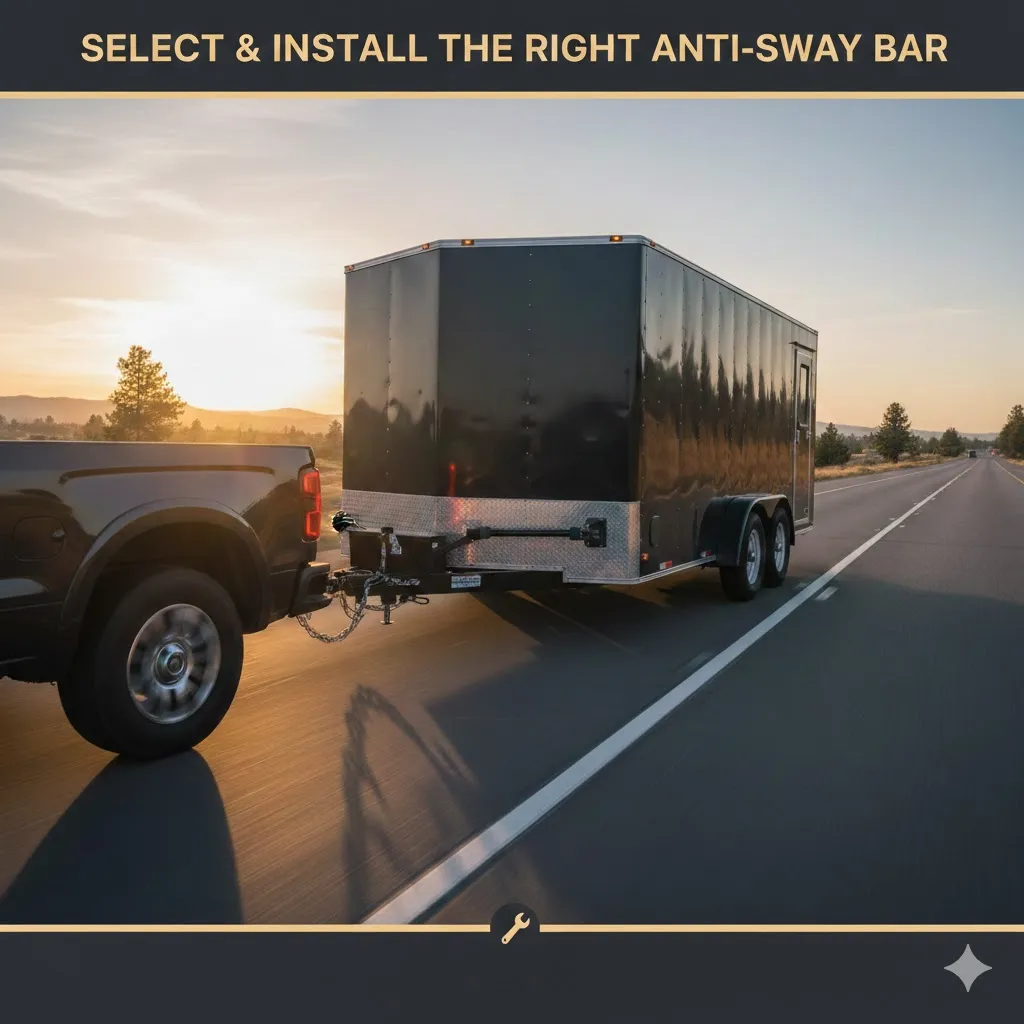
Is your steering wheel trembling every time a semi whips past you on the interstate? A few moments feel longer than the seconds when your trailer starts wagging, your heart races, and you wonder if you’ll keep everything in your lane. You’re not alone—nearly every new tower meets this jittery scenario sooner or later.
In this guide, you’ll discover why sway happens, how a trailer anti-sway bar keeps you safe, and the exact steps to pick, install, and maintain the best solution for your rig. We’ll compare friction devices to weight-distribution systems, walk through troubleshooting tips, and show you clear signs that it’s time for an upgrade. Let’s put control back in your hands and calm on the road.
Why Sway Happens—and Why Stopping It Matters
Even a perfectly balanced trailer becomes a kite when crosswinds, uneven pavement, or sudden steering inputs shove it off course. The pivot point at your hitch acts like a loose hinge, letting the trailer oscillate side to side. Add speed, and each oscillation grows until your tow vehicle fights for traction.
That yaw action isn’t just annoying. It compromises braking distance, tires your arms, and, in worst cases, causes jackknifes or rollovers. Installing an anti-sway device turns that hinge into a shock absorber. You regain directional authority, shorten stopping distance, and reduce fatigue—key benefits of modern safety towing systems that protect both your load and everyone sharing the road with you.
Understanding Your Options
Before you buy hardware, it helps to grasp how the two main categories tame sway.
Friction Sway Control
A friction unit sandwiches brake-pad material between metal plates. When you tighten its handle, it adds drag to the pivot, damping side-to-side motion. Friction bars are inexpensive, adjustable on the fly, and easy to retrofit to existing Class III or IV hitches. They shine with lighter rigs or occasional towing.
Weight-Distribution with Integrated Sway Control
A trailer-hitch weight distribution sway control system levels the load across both axles of your tow vehicle and your trailer. Spring bars transfer weight forward, restoring front-axle traction and sharpening steering. Integrated cams or dual-axle brackets add sway resistance. Although costlier, they’re the gold standard for heavier cargo, tall RVs, and long-hauls through the mountains. For even more stability, pairing that same trailer-hitch weight-distribution sway-control rig with quality shocks delivers a ride that feels anchored, not airy.
The How-To Blueprint
The following steps will help you match, mount, and care for your sway gear so it performs trip after trip.
1. Choosing the Correct Device
- Verify your combined trailer and cargo mass. Our quick towing capacity chart helps.
- Check tongue weight—10–15 % of gross trailer weight is ideal. Too light? Shift cargo forward.
- Select friction control if you’re under 5,000 lbs and pull occasionally. Opt for integrated distribution above that or when hauling high-profile loads.
- Confirm compatibility with surge brakes or an electric-over-hydraulic coupler—some friction units conflict.
2. Installing a Friction Bar
- Mount the ball plate 24 inches from the coupler on the trailer A-frame.
- Attach the sway-control ball to the tow-bar’s side plate.
- Lubricate only the balls, never the friction surfaces.
- Set initial tension to roughly seven turns of the handle; fine-tune on the road until sway just disappears.
- Remember to disengage the bar before backing into that tight campsite or the barbecue-competition row of concession trailers for sale in Georgia.
3. Setting Up a Weight-Distribution System
- Slide the shank into your receiver and torque per the manufacturer’s spec.
- With the coupler seated on the hitch ball, raise both axles using the tongue jack.
- Hook spring bars onto the brackets, then lower the jack. Your truck and trailer should now sit level—measure fender heights to confirm within ½ inch.
- Engage the integrated sway cams. Grease zerk fittings yearly; keep the friction surfaces clean and dry.
Proper setup pairs beautifully with a trailer with shocks because both systems share one goal: smooth, predictable handling. A well-tuned tow-hitch sway-control mechanism here can be the difference between white-knuckle driving and a peaceful cruise.
Ongoing Maintenance
- Wipe road grime and sand from moving parts after each trip.
- Inspect bolts, sockets, and welds monthly; tightening takes minutes but prevents failure.
- Replace pads or spring bars showing cracks, deep grooves, or rust that you can flake off with a fingernail.
- Keep a spare cotter pin and tension handle in your glove box—you’ll thank yourself at a remote boat ramp.
Troubleshooting Common Sway Issues
Even with solid equipment, a few gremlins can sneak in. Here’s how to isolate problems fast.
Sudden Sway at Highway Speeds
First, slow down by 10 mph. If sway calms, you’re exceeding your stable speed range. Next, weigh the trailer—an overloaded tail or empty water tank shifts the balance rearward. For persistent issues, confirm your tow hitch sway control isn’t under-torqued; a digital torque wrench pays for itself here. For a deeper diagnostic checklist, see this resource.
Uneven Tire Wear
Feathering on the inner tread usually means the trailer axles aren’t square to the frame. Realign or replace bent hangers. A misaligned axle amplifies sway because wheels scrub rather than roll.
Noisy or Jerky Turns
A groan while cornering signals dry pads on a friction unit. Clean with brake cleaner and re-torque. For integrated systems, verify the cams engage symmetrically; lopsided spring tension drags one side and squeals.
When It’s Time to Upgrade
Your gear served well, but signs of outgrowing it pop up.
Heavier Loads or New Trailer
Moving from a utility box to a cabin cruiser? The extra sail area demands a stabilizer bar for the trailer hitch with higher torque capacity. It might also be the moment to consider whether a gooseneck fits your lifestyle or exactly what a bumper pull trailer is.
Frequent Long-Distance Hauls
If you’re racking up interstate miles, switch from manual friction to automatic dual-cam sway control. Less fiddling equals more time fishing, racing, or relaxing.
Visible Wear or Obsolete Parts
When replacement pads cost half the price of a new complete kit, upgrade. Newer designs offer superior metallurgy, corrosion coatings, and lighter weight, enhancing both safety and fuel economy. A fresh stabilizer bar for a trailer hitch often pays for itself in tire life and peace of mind.
Steady Miles Ahead With Wagoneer Trailers
We’ve walked through the reasons why sway starts, the gear that stops it—including the trusty trailer anti-sway bar—and the steps to keep every mile controlled. At Wagoneer Trailers in Georgia, we engineer and source towing solutions that fit real-life budgets and road conditions. Our team installs and calibrates everything from friction bars to full-weight distribution hitches, so you drive off confident.
Whether you’re hauling an RV, jet skis, or work equipment, we’ll match you with components tailored to your rig and driving style, backed by friendly guidance and in-stock parts. Let’s keep your adventures smooth—tap the button, tell us about your setup, and our experts will handle the rest.

Cameron Fitzgerald
Owner of Wagoneer Trailers since 2019. Combines 9+ years of transportation industry expertise with a focus on customizable trailer solutions and customer-centric financing.
