
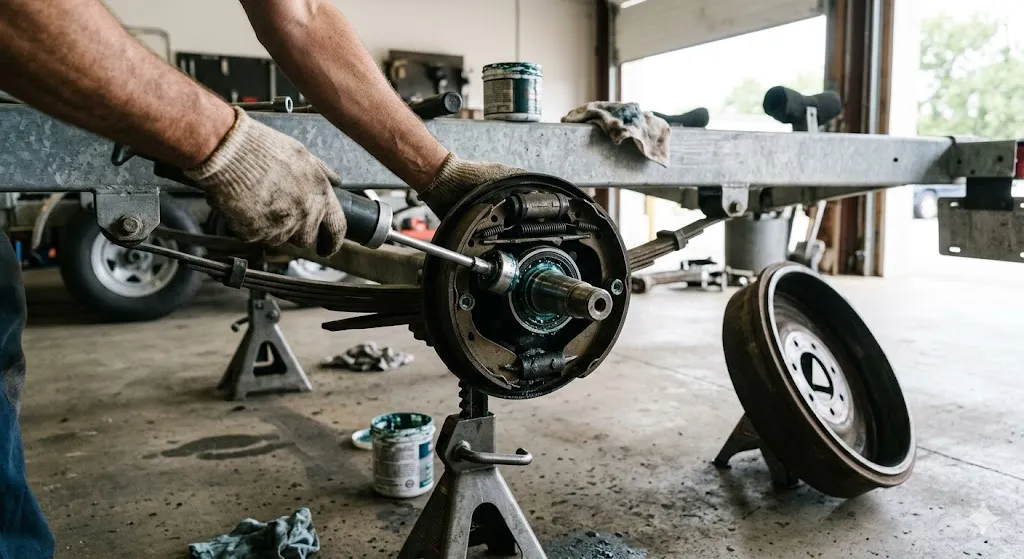
Most trailer problems don’t start with something dramatic. They start with a small component wearing down — a loose bearing, a worn brake shoe, or a damaged hub.
The axle system sits at the center of all of this. It supports the trailer’s weight, keeps the wheels aligned, and allows the suspension and braking system to work together while you’re towing.
Understanding the components shown in a trailer axle parts diagram makes maintenance easier and helps you recognize problems before they turn into roadside breakdowns.
Let’s walk through the key parts that make up a trailer axle system and how to keep them working properly.
Understanding the Basic Trailer Axle Layout
The axle system connects the trailer frame to the wheels and supports the entire load during transport. It also houses several mechanical parts responsible for braking and rotation.
A typical trailer diagram parts layout includes:
- Axle beam
- Hubs
- Bearings
- Brake assemblies
- Suspension components
Together, these pieces support the trailer’s weight and allow the wheels to rotate smoothly while absorbing road impact. When one of these components begins to wear out, it often affects the entire axle system.
Key Components in a Trailer Axle Assembly
To understand how a trailer works mechanically, it helps to break down the individual parts you’ll see in a trailer axle parts diagram.
Axle Beam
The axle beam is the central shaft that runs from one wheel to the other. It supports the weight of the trailer and distributes that load across the suspension and tires.
Axles are designed to handle specific weight ratings, which is why selecting the right trailer for your hauling needs is important.
Hub Assembly
The hub connects the wheel to the axle and allows it to spin freely. Inside the hub are bearings that reduce friction during movement.
A trailer hub assembly diagram typically includes:
- Wheel studs
- Bearings
- Grease seal
- Dust cap
These components work together to support wheel rotation while protecting the internal parts from dirt and debris.
Wheel Bearings
Wheel bearings allow the hub and wheel to rotate smoothly around the axle spindle. Without proper lubrication, these bearings can overheat or wear out quickly.
Routine inspection and greasing are key parts of maintaining the axle system.
Understanding the Wheel and Brake Assembly
Beyond the axle beam and hubs, trailers also rely on braking components to safely slow the load while towing.
A trailer wheel assembly diagram shows how the wheel, hub, and brake components connect to the axle spindle. These parts must work together correctly for the braking system to operate safely.
Drum Brake Components
Many trailers use drum brakes, which rely on friction inside the brake drum to slow the wheel.
A typical drum brake parts diagram includes:
- Brake shoes
- Brake magnet
- Return springs
- Adjuster mechanism
- Backing plate
When the brakes activate, the shoes press against the drum to create friction and reduce wheel speed. Over time, these parts wear down and require adjustment or replacement.
Signs Your Trailer Axle Components Need Attention
Many axle problems develop gradually. Knowing what to look for can help prevent more serious mechanical issues.
Common warning signs include:
- Uneven tire wear
- Grinding noises while towing
- Excess heat near the wheel hub
- Reduced braking performance
- Grease leaking from the hub area
These symptoms often indicate worn bearings, brake components, or hub issues.
Inspecting the axle system regularly helps identify these problems before they lead to costly repairs.
Essential Maintenance for Trailer Axle Systems
Routine maintenance keeps the axle system working smoothly and extends the life of your trailer.
Simple maintenance steps include:
- Inspect bearings and hubs regularly. Bearings should remain well-lubricated to prevent overheating.
- Check brake components. Brake shoes, magnets, and springs should be inspected for wear.
- Monitor tire wear patterns. Uneven wear may indicate alignment or axle problems.
- Keep hubs properly greased. Lubrication reduces friction and protects internal components.
Regular inspections help ensure the axle, wheel assemblies, and brake systems continue working together safely.
Wagoneer Trailers: Built for Durable, Dependable Hauling
A well-built trailer starts with a strong axle system. Frame strength, axle alignment, and quality components all play a role in how safely and smoothly a trailer performs on the road.
At Wagoneer Trailers, we design and sell enclosed trailers across Georgia built for reliable hauling and long-term durability. Our trailers are engineered with dependable axle systems that support balanced loads and consistent performance.
If you’re looking for a trailer designed for strength, stability, and dependable hauling, our team is ready to help.

Cameron Fitzgerald
Owner of Wagoneer Trailers since 2019. Combines 9+ years of transportation industry expertise with a focus on customizable trailer solutions and customer-centric financing.
