
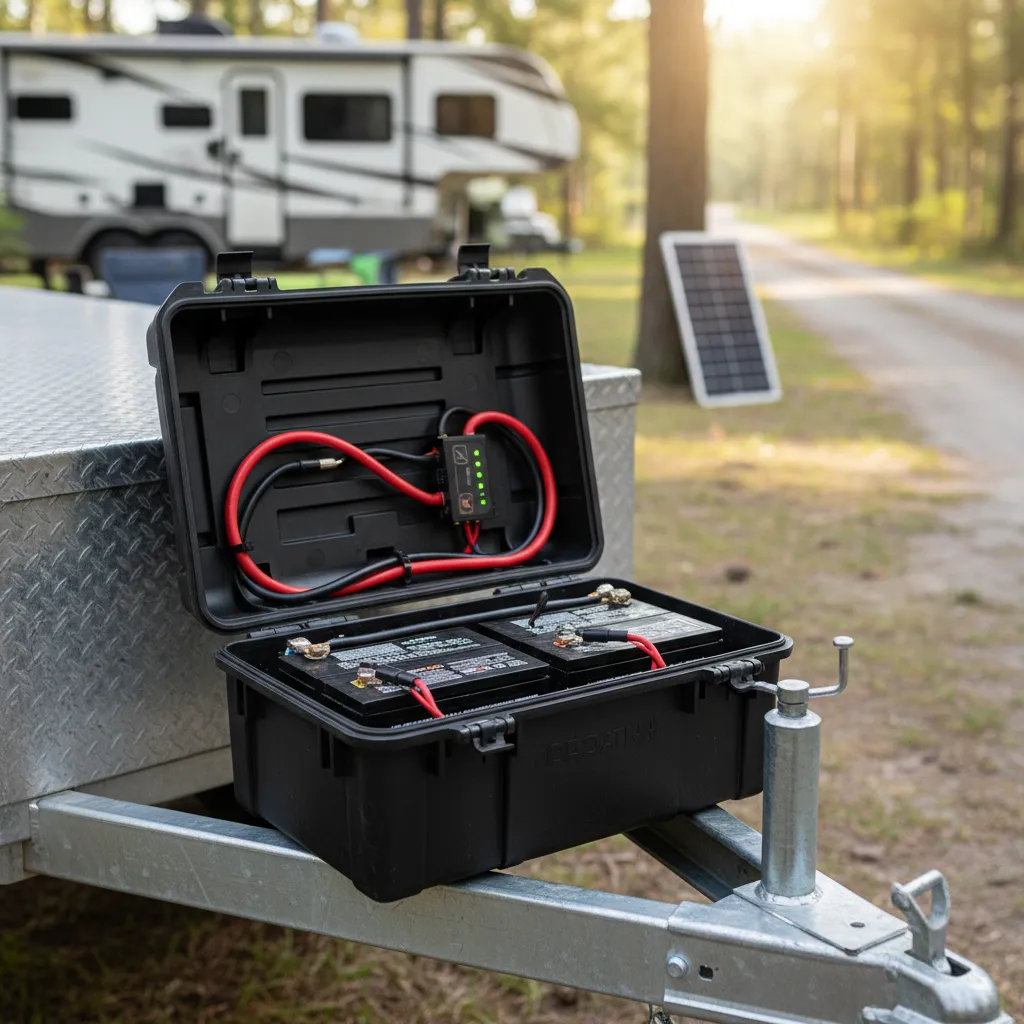
Adding power to an enclosed trailer can change how useful it is.
Interior lights can work when there’s no outlet nearby. Tools can charge between jobs. Fans can keep air moving, and other electrical accessories can become part of your everyday setup instead of something you can only use when shore power is available.
But a battery shouldn’t be treated like another accessory you simply bolt into an open space. A good trailer battery box setup starts with figuring out what you want the electrical system to accomplish, then choosing a location and configuration that make sense for the trailer.
Before adding power, there are three decisions worth getting right.
1. Figure Out What You’re Asking the Battery to Do
“Adding power” can mean very different things depending on the trailer.
For a basic cargo trailer, the battery may only need to support interior LED lights. A contractor might want lights plus tool chargers and ventilation. A more customized build could include security equipment, powered accessories, or other electrical features.
Those differences matter because they determine how much power you realistically need.
Rather than beginning with battery size, begin with the equipment. Think about what will run from the battery, how often you’ll use those items, and whether several of them need power at the same time.
A practical trailer power setup is sized around real use. Going bigger than necessary can add weight, take up valuable space, and make the system more complicated without providing much everyday benefit.
2. Give the Battery a Place That Actually Makes Sense
Once you know what the battery needs to accomplish, placement becomes the next decision.
An enclosed trailer battery box provides a dedicated location where the battery can remain secured and protected while the trailer is moving. That matters in a space where tools, equipment, and cargo may shift during transportation.
Accessibility matters too. You don’t want to bury the battery behind permanent cabinets or equipment if you’ll need to inspect, charge, or eventually replace it.
Then there’s weight.
A battery may seem small compared with the equipment you haul, but every addition contributes to the trailer’s overall load. Battery placement should therefore work with the rest of the trailer layout rather than being decided completely on its own.
The type of battery and electrical system can also affect installation requirements, including ventilation and manufacturer recommendations. This is one area where following the requirements for the specific equipment matters more than finding the most convenient empty corner.
3. Don’t Forget That the Battery Eventually Needs Power, Too
Installing a battery solves one problem and immediately introduces another: How are you going to recharge it?
That answer depends on the trailer.
Some setups may use an appropriate external charging source or shore power. Others may eventually incorporate solar equipment. The important part is thinking about charging while planning the system instead of waiting until the battery is already installed.
This is particularly useful if your trailer is going to evolve.
Maybe today you only need lights. Six months from now, you might want a roof fan. Later, you could add more charging capability or additional electrical accessories.
Planning your cargo trailer battery around some reasonable future expansion can make those changes much easier.
Sometimes a Simple System Is the Better System
There’s no prize for putting the biggest electrical system inside an enclosed trailer.
If you only need dependable lighting and occasional accessory power, keeping the setup relatively simple may be exactly the right choice. If you’re building a mobile workshop or another trailer with greater electrical demands, additional capacity may be worthwhile.
What matters is that the system fits the trailer’s purpose.
That’s also why it helps to consider battery power alongside other customization decisions. Lighting, shelving, cabinets, ventilation, and electrical equipment can all compete for interior space. Planning them together usually produces a cleaner and more functional layout than adding each feature independently later.
Power Should Make the Trailer More Useful, Not More Complicated
A well-planned battery setup tends to disappear into the trailer.
You open the doors, turn on the lights, charge what needs charging, and get on with whatever brought you there. The battery is secure, accessible when necessary, and capable of supporting the equipment you actually use.
That’s the real goal.
Not maximum power. Not the most complicated electrical system. Just reliable power that fits the job.
Plan Your Next Build With Wagoneer Trailers
At Wagoneer Trailers, we help customers across Georgia choose enclosed trailers that can be customized around the way they work, haul, and travel. That includes thinking ahead about features such as lighting, storage, electrical upgrades, and interior layouts before the trailer takes shape.
Whether you need a straightforward cargo trailer or a more customized build for your business or equipment, we offer durable, affordable options with flexible financing and direct delivery available.
ASK FOR OUR ENCLOSED TRAILER TODAY!

Cameron Fitzgerald
Owner of Wagoneer Trailers since 2019. Combines 9+ years of transportation industry expertise with a focus on customizable trailer solutions and customer-centric financing.
