
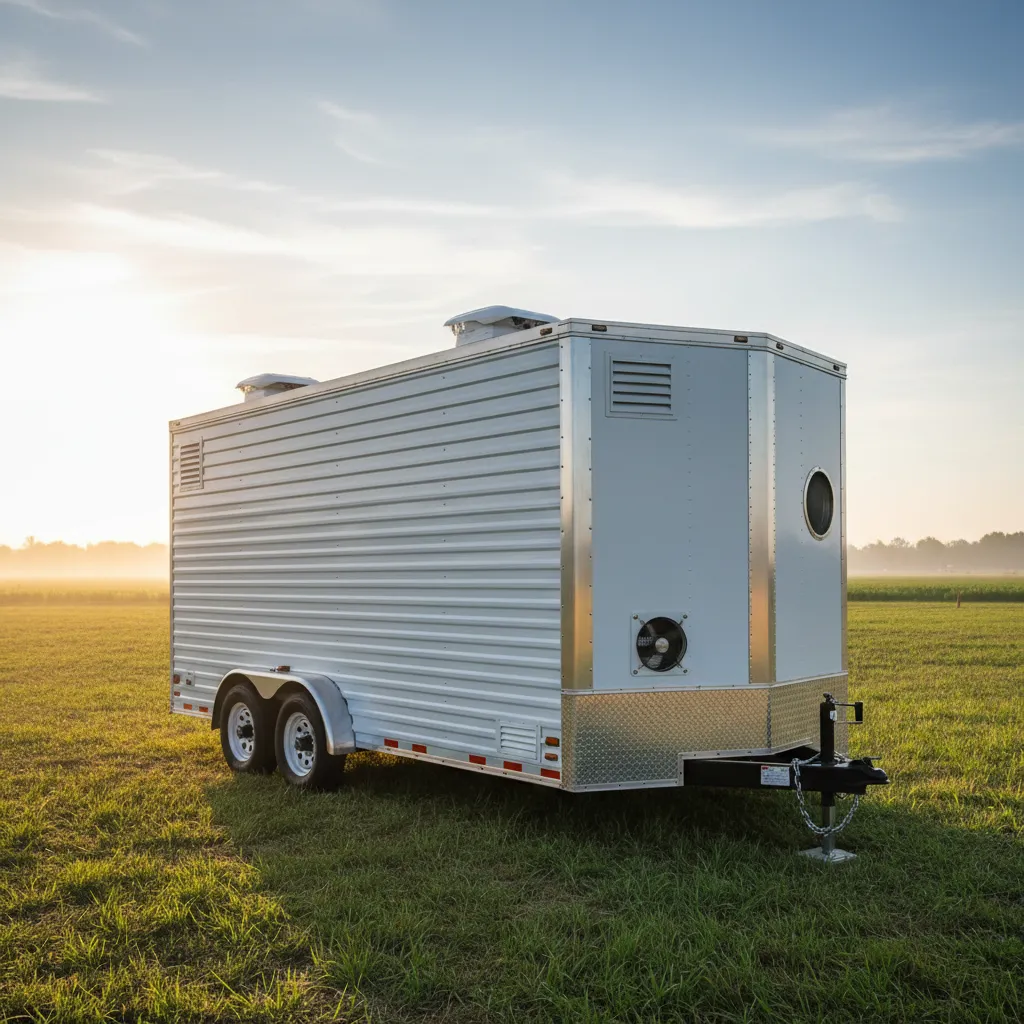
A closed trailer can change fast.
Park it in the sun for a few hours, and the inside can feel much hotter than expected. Leave damp equipment inside overnight, and moisture starts becoming a problem. Haul tools, gear, pets, or products often enough, and airflow stops feeling like a nice extra.
It becomes part of how usable the trailer is.
That’s why trailer ventilation deserves more attention than many buyers give it. Vents, windows, fans, and airflow planning can help control heat, reduce trapped moisture, and make the trailer more comfortable to use day after day.
The right setup depends on what you’re trying to fix first.
If Heat Is the Main Problem
Heat is usually the first ventilation issue people notice.
An enclosed trailer sitting in direct sun can hold heat quickly, especially if it has dark exterior colors, limited airflow, or no roof vents. That matters if you store tools, equipment, products, or anything sensitive to temperature inside.
Roof vents are one of the most common solutions because hot air naturally rises. When warm air has somewhere to escape, the inside of the trailer can feel less trapped and stuffy.
For trailers used during long workdays, adding powered ventilation can make an even bigger difference. A fan helps pull hot air out instead of relying only on passive airflow.
If Moisture Is the Bigger Concern
Moisture is quieter than heat, but it can cause just as many problems.
Wet tools, lawn equipment, pressure washing gear, muddy boots, and changing outdoor temperatures can all bring moisture into the trailer. Once the doors close, that moisture gets trapped inside.
Over time, poor enclosed trailer ventilation can contribute to musty smells, surface rust, condensation, and damage to stored materials.
A good ventilation setup helps air move instead of sitting still. Even basic vents can reduce trapped humidity when placed correctly. For trailers that regularly carry damp equipment, airflow should be part of the trailer design from the start.
If You Need Better Airflow While Working Inside
Some trailers are more than storage.
They’re used as mobile workspaces, vending setups, equipment stations, or jobsite support trailers. In those cases, ventilation affects comfort as much as cargo protection.
If people spend time inside the trailer, airflow should feel intentional. A roof vent can release warm air, while side vents or windows can bring in fresh air. Together, they create movement instead of letting air sit in one place.
That’s where cargo trailer vents can be especially useful. They give the trailer a way to breathe without requiring the doors to stay open all the time.
The Best Vent Setup Usually Needs an Entrance and an Exit
Airflow works best when air can move through the trailer, not just into it.
Think of it like opening one window in a house versus opening windows on opposite sides. One opening helps. Two openings create movement.
The same idea applies to trailers.
A roof vent alone may help hot air escape. A side vent alone may allow some fresh air in. But when vents are planned together, trailer airflow becomes much more effective.
That’s why placement matters. Ventilation is not only about adding parts. It’s about creating a path for air to move.
What Type of Ventilation Makes Sense?
Different trailers need different airflow solutions.
A simple cargo trailer used for occasional storage may only need passive vents to prevent stale air and reduce moisture buildup. A trailer used every day for work may benefit from roof vents, sidewall vents, or powered fans.
A trailer that carries heat-sensitive products may need stronger airflow planning than one used for general tools. A trailer used around pets, food service, or mobile business equipment may need ventilation that supports comfort, cleanliness, and consistent air movement.
The best setup is the one that matches the trailer’s actual use.
Small Ventilation Choices Can Change Daily Use
Ventilation may not sound exciting during the buying process.
But it becomes noticeable quickly.
A trailer that smells fresher, cools down faster, and protects equipment better is easier to use. It feels less like a sealed box and more like a functional space.
That difference matters for anyone who opens the trailer every day, stores valuable equipment inside, or wants the interior to stay cleaner over time.
Wagoneer Trailers: Helping You Build a Trailer That Breathes Better
At Wagoneer Trailers, we help customers across Georgia choose enclosed trailers that fit real hauling needs, not just basic dimensions. Ventilation is one of those details that can make a trailer more comfortable, more practical, and better suited for daily use.
Whether you need roof vents, side vents, windows, or a customized setup for heat and moisture control, we’ll help you think through the features that make sense for the way you haul.
CONTACT US TO REQUEST MORE INFORMATION

Cameron Fitzgerald
Owner of Wagoneer Trailers since 2019. Combines 9+ years of transportation industry expertise with a focus on customizable trailer solutions and customer-centric financing.
