
The moment you start looking for a trailer, one question shows up quickly: Which type do you actually need?
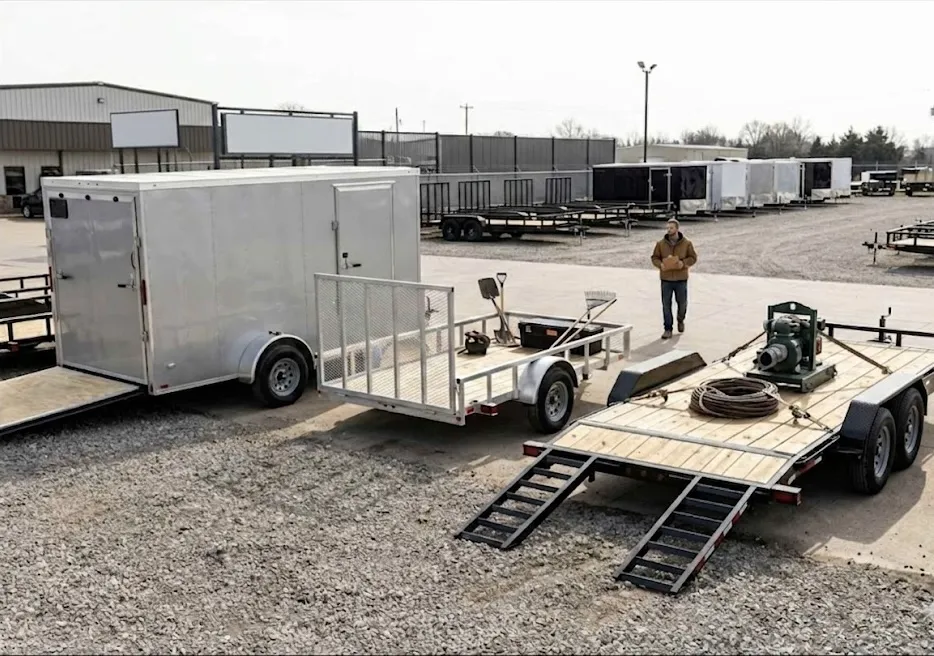
There are several types of trailers for hauling, and each one is designed with a specific purpose in mind. Some trailers protect cargo from weather and theft. Others are built to simplify loading heavy equipment. Some focus on flexibility so you can transport a wide variety of materials or vehicles.
Choosing the right trailer starts with understanding what each design does best and how it fits the kind of hauling you plan to do. Once you understand the strengths of each trailer type, it becomes much easier to select a setup that supports your work or projects.
Start by Matching the Trailer to the Job
The first step is simple: think about what you plan to haul most often.
A contractor hauling equipment needs something very different than someone transporting furniture, landscaping tools, or recreational vehicles. The design of the trailer affects more than just storage space. It also influences loading convenience, towing stability, and the total weight the trailer can safely carry.
For example, enclosed trailers are often chosen for tools or equipment that need protection from weather. Open trailers may be better for materials that are easier to load from multiple directions.
Once you clearly define how the trailer will be used, comparing the different types of trailers for hauling becomes much easier.
Cargo Trailers: Enclosed Protection for Equipment and Tools
Cargo trailers are one of the most versatile options available. Because they’re enclosed, they protect cargo from rain, dust, road debris, and potential theft.
These trailers are commonly used for transporting:
- Tool storage and transport
- Business equipment
- Moving furniture or supplies
- Mobile workshops or vending setups
Many businesses rely on cargo trailers because they provide both transportation and secure storage. Contractors, event vendors, and mobile service providers often keep equipment inside the trailer between jobs.
Cargo trailers are available in multiple trailer sizes, allowing you to choose the right amount of interior space depending on the equipment you carry. Smaller trailers work well for basic tool storage, while larger models can function almost like a portable workspace.
Utility Trailers: Flexible and Easy to Load
Utility trailers are open trailers designed for quick and easy loading. Instead of enclosed walls, they typically include low side rails and a rear ramp gate.
Because of their open design, utility trailers are especially useful when loading items that don’t need weather protection.
They are frequently used for hauling:
- Lawn equipment and mowers
- Landscaping materials
- Small vehicles or ATVs
- Construction supplies
Many smaller utility trailers use a single axle, which keeps them lightweight and easier to maneuver. This makes them popular for homeowners, landscapers, and small contractors who need a simple hauling solution for lighter loads.
The rear ramp gate also makes it easy to roll equipment directly onto the trailer without using separate ramps.
Flatbed Trailers: Built for Larger or Heavier Loads
Flatbed trailers are designed for hauling oversized items that wouldn’t fit easily inside an enclosed trailer.
Instead of side walls, these trailers provide a wide, open platform that allows cargo to be loaded from the sides, rear, or even from above using machinery.
A small flatbed trailer is often used for transporting items like lumber, pallets, or compact equipment. The open layout allows forklifts or loading equipment to access cargo from multiple directions.
For taller vehicles or larger machinery, a small deckover trailer can provide additional loading space. Deckover trailers position the trailer bed above the wheels, which creates a wider platform without wheel wells restricting the deck.
Flatbed and deckover trailers are commonly used for hauling:
- Construction equipment
- Machinery and tools
- Vehicles
- Large building materials
Because of their open design, these trailers are ideal when cargo size or shape varies from job to job.
Suspension Systems Also Affect Trailer Performance
Beyond trailer design, the suspension system also plays a major role in how the trailer performs while towing.
One common comparison is spring axle vs torsion axle suspension.
Spring axles use traditional leaf springs to absorb road impact. This design is widely used because it is durable, relatively simple to maintain, and well suited for heavier loads.
Torsion axles use internal rubber cords to provide suspension. This setup often delivers a smoother ride and can reduce vibration when transporting sensitive equipment or fragile cargo.
Both systems work well, but the best choice often depends on the type of trailer and the conditions in which it will be used.
Understanding Trailer Size and Capacity
Selecting the right trailer also means paying attention to trailer sizes and load capacity.
The size of the trailer determines how easily cargo fits inside or on the deck, while the weight rating determines how much the trailer can safely carry.
When comparing types of trailers for hauling, consider several important factors:
- Interior or deck space
- Maximum weight capacity
- Axle configuration
- Ease of loading and unloading
Choosing the right combination of size and capacity helps ensure the trailer can safely support both your cargo and your towing vehicle.
Wagoneer Trailers: Helping You Find the Right Trailer for the Job
Choosing the right trailer becomes much easier when you have options designed for real hauling needs.
At Wagoneer Trailers, we build and sell enclosed trailers across Georgia designed for durability, dependable towing, and practical hauling setups. Whether you’re looking for a cargo trailer, utility trailer, flatbed option, or a custom build tailored to your work, our team helps you find a trailer that fits the job.
If you’re exploring trailer options and want guidance on size, design, and hauling capability, we’re here to help.

Cameron Fitzgerald
Owner of Wagoneer Trailers since 2019. Combines 9+ years of transportation industry expertise with a focus on customizable trailer solutions and customer-centric financing.
