
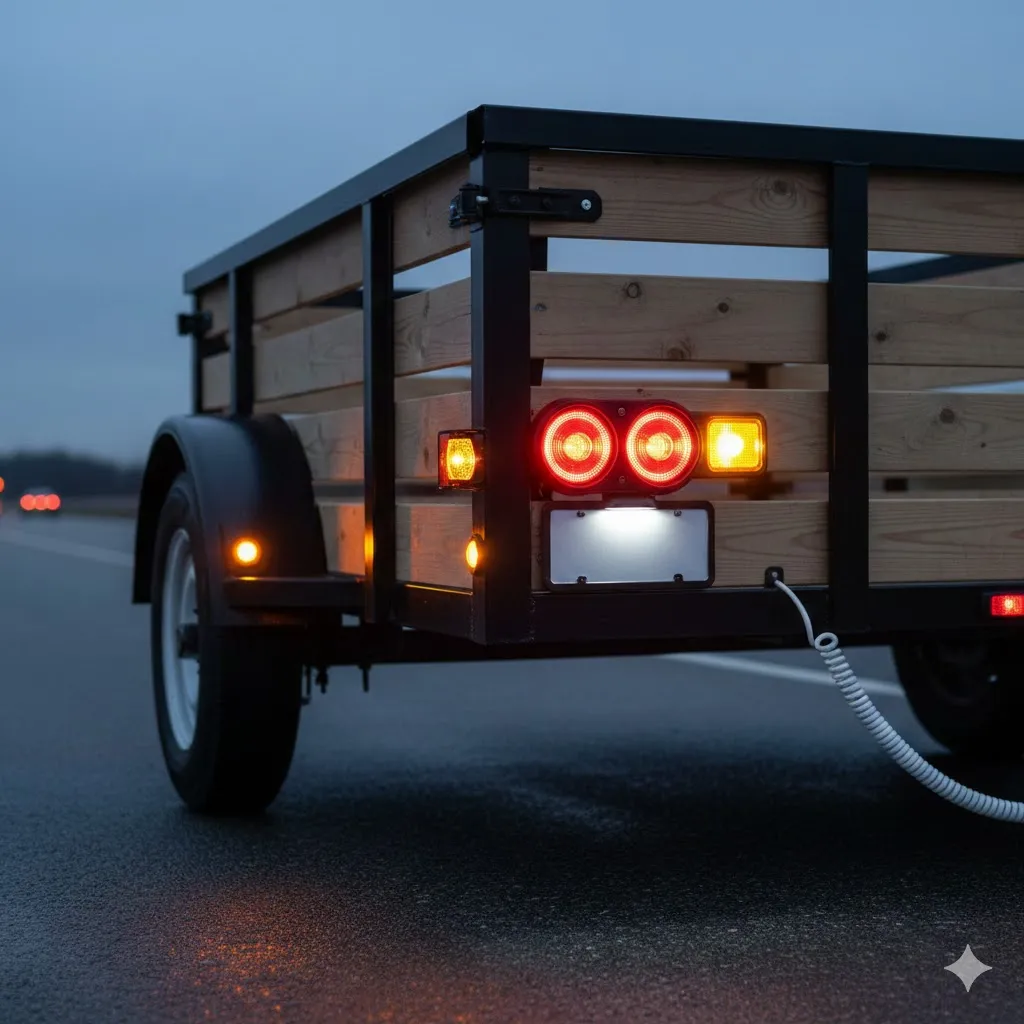
Ever wondered why that seemingly tiny missing bulb on your trailer could cost you hundreds in fines—or worse, jeopardize lives on the highway? Too many owners discover lighting problems only after a police stop or near-miss. If that feels painfully familiar, keep reading.
In this blog, we’ll walk through what the law expects, why those expectations matter, and how you can meet them without stress. You’ll see how federal and state rules fit together, where they diverge, and what proactive checks prevent roadside surprises. Plus, you’ll find helpful links—like a full guide to trailer lights not working—ready for deeper dives when you need them. Let’s get started!
Mastering Federal DOT Lighting Rules
Federal Motor Carrier Safety Regulations lay the groundwork for every light on your trailer. Understanding utility trailer lighting requirements is the first step toward building or maintaining a roadworthy setup, so we break down each category required for nationwide compliance below. These DOT lighting requirements for trailers are non-negotiable, but they’re straightforward once you see how they fit together.
Tail Lights
Tail lights serve as the constant red glow that announces your presence after dark. They must be mounted symmetrically on the rear, between 15 and 72 inches from the ground, and visible from 1,000 feet. If you’re outfitting enclosed-trailer tail lights, ensure the enclosure doesn’t obstruct that sight line—something that should always be considered early in enclosed-trailer design.
Brake Lights
Brake lamps use the same housing as tail lamps on most models, but must burn brighter when you press the pedal. A failed brake circuit is among the most common citations during a routine DOT trailer inspection, so confirm wiring integrity and that the bulb wattage meets federal specs.
Turn Signals
Amber in front, red or amber in back—turn signals tell following motorists your intended path. Flash rate should be 60–120 cycles per minute. When upgrading to LED trailer running lights for signals, make sure the new flasher module is LED-compatible to avoid hyper-flash or total failure.
Side Marker Lamps
Side markers illuminate the trailer’s length. Front side markers must be amber; rear side markers must be red. Placement rules mirror tail lights: 15–60 inches above road level. These meet part of the DOT lighting requirements for trailers, which aim to outline a vehicle’s full footprint at night.
Rear & Side Reflectors
Reflectors act as passive guardians when your lights aren’t powered. Red goes on the back and rear sides; amber on the front sides. They must be visible from 600 feet when hit by low-beam headlights, rounding out the DOT trailer light requirements that keep you seen even if a fuse blows.
Navigating State-Level Variations
While federal law sets the baseline, states fine-tune details. Next, we highlight the most frequent additions so you can adapt before crossing a border.
License Plate Illumination
Most states mandate a white lamp that makes the tag readable from 50 feet. Skipping this often leads to stops as costly as failing to carry a proper trailer license plate itself. Some states specify LED only; others require automatic activation with tail lights.
Color Nuances
A few jurisdictions prohibit auxiliary blue or green accent LEDs. Others insist on amber clearance lights up front, even for smaller rigs. Confirm local codes before designing custom trailer clearance lights requirements; non-OEM hues might look sharp but can trigger citations.
Size and Weight Thresholds
States sometimes require additional lighting if your trailer is over 80 inches wide or 30 feet long. For example, Illinois demands three red identification lamps on wide loads, echoing truck marker light requirements for big rigs. Double-check dimensions during build stages to avoid last-minute rewiring, and ensure any added fixtures meet the updated trailer clearance light requirements that apply once you cross those size thresholds.
Preventing and Fixing Common Lighting Failures
Even perfect installations degrade. This section walks you through the glitches we see weekly in the shop and how to tackle them quickly.
Wiring Corrosion and Shorts
Road salt, moisture, and vibration corrode wires at connectors first. Periodically inspect for green powder, frayed insulation, or burnt fuses. When issues arise, our dedicated trailer lights not working resource walks you through diagnostics step by step. Swift action keeps you from violating DOT trailer light requirements during an unexpected inspection.
LED vs. Incandescent Upgrades
LED units draw less power and last longer, but they’re unforgiving about voltage spikes. Surge-protected harnesses and quality ground points are critical. If you convert, remember that LEDs shine brighter; verify alignment so oncoming drivers aren’t blinded—especially when pondering “Do you need lights on a trailer during the day?”, or in scenarios where daylight running may apply. Quality LED trailer running lights often ship with built-in resistors that stabilize current and reduce flicker.
Daily Pre-Trip Inspections
A 60-second walk-around saves countless headaches. Check lens cracks, test every function, and confirm reflectors are clean. Owners of enclosed cargo haulers should keep spare bulbs sized for enclosed-trailer tail lights in their toolboxes.
Lighting Insights That Drive Safe Roads With Wagoneer Trailers
We’ve covered the full spectrum of utility trailer lighting requirements, from federal must-haves to state quirks and practical troubleshooting. At Wagoneer Trailers, we build every frame, harness, and sealed connection with these rules baked in for all our concession trailers in Georgia. Our engineers stay current on evolving statutes, so when you tow, you know you’re spotlight-ready and citation-proof.
Because we fabricate to order, we can integrate specialty LEDs, custom brackets, and wiring looms that plug straight into your truck—no garage rewiring required. Let’s design a rig that keeps cargo illuminated, authorities satisfied, and your business rolling smoothly. Contact us today to learn more.

Cameron Fitzgerald
Owner of Wagoneer Trailers since 2019. Combines 9+ years of transportation industry expertise with a focus on customizable trailer solutions and customer-centric financing.
