
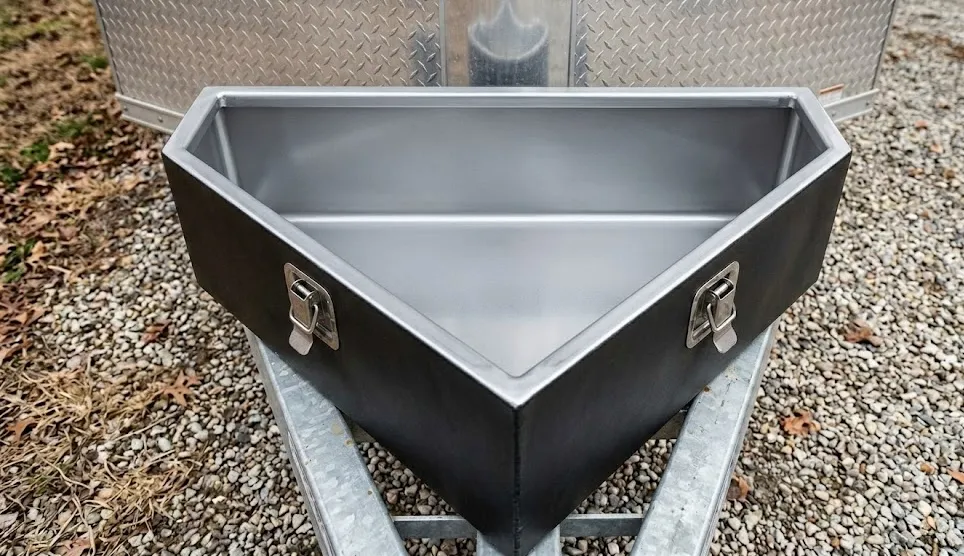
There’s always that one spot in a trailer where things don’t quite belong. Tie-down straps end up in a corner. Tools slide around. Smaller items get buried under everything else. You know they’re in there—you just don’t want to dig for them every time.
That’s where a tongue box starts to make sense.
Adding a tongue box for v nose trailer setups isn’t only about extra storage. It’s about keeping your most-used items organized, easy to access, and out of the way of your main cargo space.
If you’re already using your trailer regularly, this upgrade tends to pay off quickly.
Why a Tongue Box Works So Well on V-Nose Trailers
V-nose trailers already give you a bit of extra space at the front. But without organization, that space often goes unused—or worse, becomes a catch-all for loose gear.
A tongue box takes advantage of that front area without interfering with the rest of your trailer.
It gives you a dedicated place for:
- Straps and tie-downs
- Tools and small equipment
- Hitch accessories
- Safety gear
Instead of mixing everything inside your trailer, you separate what you need often from what you’re hauling.
That small change makes your setup feel more intentional.
Choosing the Right Tongue Box for Your Setup
Not all boxes fit every trailer the same way. A little planning upfront helps you avoid clearance issues or wasted space.
When selecting a tongue box for a V-nose trailer, consider how it will sit between the trailer frame and the hitch.
Size and Fit Matter First
Measure the available space on your trailer tongue before choosing a box. V-nose designs vary slightly, so you want something that fits cleanly without blocking the coupler or jack.
A properly sized box should feel like part of the trailer—not something added as an afterthought.
Material and Durability
Most tongue boxes are made from aluminum or steel.
Aluminum is lighter and resists corrosion well, which makes it a popular choice for frequent use. Steel tends to be heavier but can offer additional durability depending on the build.
Think about how often the trailer is used and the conditions it’s exposed to.
Accessibility and Lid Design
Some boxes open from the top, while others offer side access.
If your trailer already includes features like an enclosed trailer with windows, visibility and access points matter even more. You want to be able to reach what you need without working around awkward angles or tight spaces.
The easier it is to access, the more you’ll actually use it.
How a Tongue Box Fits Into Your Overall Setup
Adding a tongue box works best when it complements the rest of your trailer layout.
If you’re already using v nose cargo trailer shelves, the tongue box becomes an extension of that organization. Shelves handle larger tools and equipment, while the box stores smaller, frequently used items.
For trailers equipped with ramp overs for enclosed trailers, keeping tools and accessories in a front-mounted box helps keep the interior clear for loading.
It’s less about adding storage—and more about placing things where they make sense.
Installing a Tongue Box Without Overcomplicating It
The installation process is usually straightforward, but taking your time makes a difference.
You’re attaching something to a part of the trailer that affects balance and accessibility, so placement matters.
A Simple Way to Install It Correctly
If you want a smooth installation, focus on a few key steps:
- Position the box before drilling. Set the box in place and check for clearance around the hitch, jack, and trailer frame. Make sure nothing interferes with movement or access.
- Mark and secure mounting points. Use mounting hardware that’s strong enough to handle vibration from the road. Tight, secure connections prevent shifting over time.
- Keep weight distribution in mind. A tongue box adds weight to the front of the trailer. While that can help with balance, avoid overloading it with heavy items.
- Double-check access after installation. Open and close the lid to confirm it doesn’t interfere with other trailer components.
Done right, the box feels like it’s always been part of the trailer.
Making the Most of Your Storage Space
Once the box is installed, how you use it matters just as much as the installation itself.
Keep frequently used items inside so you’re not opening the trailer every time you need something small. Avoid overpacking the box, which can make it harder to stay organized.
The goal is convenience—not more clutter.
Wagoneer Trailers: Built for Practical, Organized Hauling
A well-organized trailer doesn’t happen by accident. It comes from choosing the right setup from the beginning—and adding the right upgrades over time.
At Wagoneer Trailers, we build and sell enclosed trailers across Georgia designed for real-world use. That means layouts that support organization, durability that holds up under daily work, and options that make your trailer easier to use every time you load it.
Whether you’re adding features like shelves, ramp systems, or a tongue box for v nose trailer setups, we help you create a trailer that works the way you need it to.
If you’re ready to turn your trailer into something more efficient and easier to manage, we’re here to help.

Cameron Fitzgerald
Owner of Wagoneer Trailers since 2019. Combines 9+ years of transportation industry expertise with a focus on customizable trailer solutions and customer-centric financing.
