
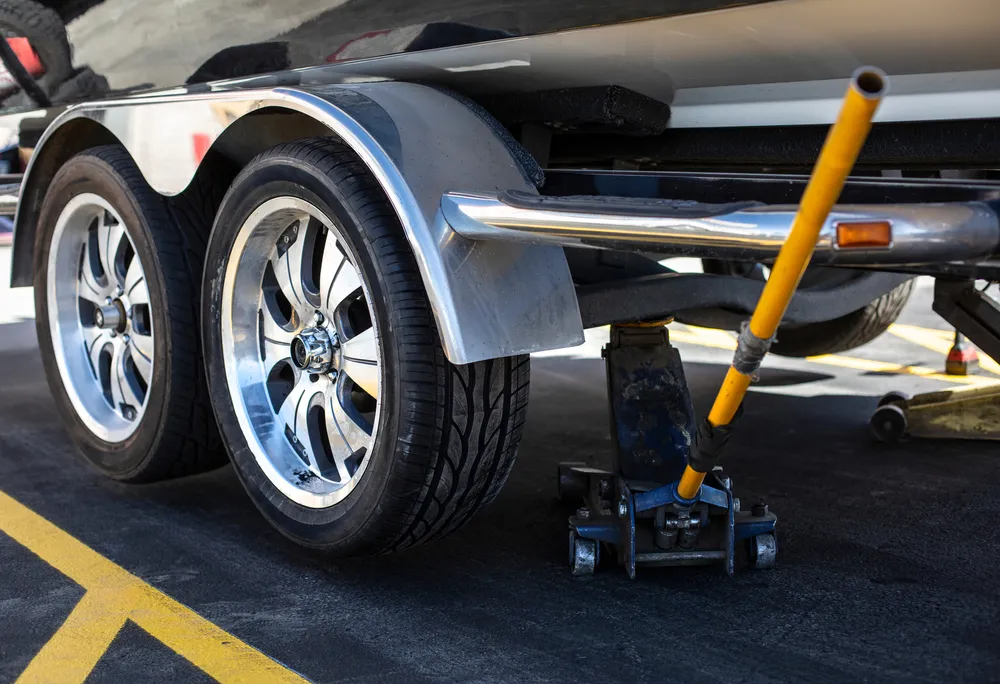
Trailer tires rarely fail without warning. In most cases, blowouts happen because of aging rubber, gradual tread wear, or repeated load stress — not because the tire suddenly looks destroyed.
Understanding when to replace trailer tires helps you prevent roadside delays, protect your cargo, and maintain safer towing performance. Trailer tires carry constant weight and often sit unused for extended periods, which affects how they age.
Recognizing the key replacement signals makes the decision much clearer.
Key Signs It’s Time to Replace Your Trailer Tires
Tire replacement isn’t based on one factor alone. Age, tread condition, structural integrity, and usage patterns all play a role.
If you monitor these five indicators, you’ll have a much better sense of whether your tires are still safe to run, or if replacement should move to the top of your maintenance list.
1. The Tires Are Five to Six Years Old
Rubber degrades over time, even if the trailer isn’t used frequently.
Most manufacturers recommend replacing trailer tires every five to six years regardless of tread depth. Exposure to heat, sunlight, and seasonal temperature changes slowly weakens the internal structure.
Check the DOT code on the sidewall. The last four digits indicate the week and year of manufacture. If that date shows your tires are approaching the six-year range, replacement becomes a proactive safety decision. Age alone can justify choosing to replace trailer tires.
2. Tread Wear Is Noticeably Reduced or Uneven
Tread depth affects traction and braking performance.
If wear appears uneven —such as excessive wear in the center or along the edges — inflation or load distribution may be off. Even if tread hasn’t reached the legal minimum, reduced traction increases stopping distance and heat buildup at highway speeds.
When evaluating when to replace trailer tires, don’t wait until the tread is completely worn down. Performance declines before the tire becomes visibly bald.
3. Sidewalls Show Cracking, Bulging, or Dry Rot
Sidewalls handle constant load pressure. Surface cracking can indicate rubber aging. Bulges or bubbles suggest internal separation, which increases the risk of sudden failure. Deep cracks weaken the tire’s structural integrity.
Unlike gradual tread wear, sidewall damage can escalate quickly under load. Replacing the tire at the first signs of serious deterioration reduces blowout risk.
4. The Trailer Regularly Carries Heavy Loads
Heat is one of the main causes of tire failure. If your trailer consistently operates near its rated capacity, internal stress builds over time. Even when tread appears acceptable, repeated load pressure shortens tire lifespan.
This is especially relevant for commercial hauling. If you’re already planning maintenance like trailer brake replacement or evaluating whether adding brakes to a trailer would improve stopping performance, tire condition should be reviewed at the same time.
Consistent heavy use accelerates replacement timelines.
5. You’re Preparing for Extended Highway Travel
Long-distance towing increases sustained heat exposure. If your trailer hasn’t been inspected recently and you’re planning extended highway travel, evaluate tire age, wear, and condition beforehand. Preventative replacement costs less than emergency roadside repair.
During inspection, also check electrical connections in case trailer wiring harness repair is needed, and confirm proper system function if your dump trailer relies on correct hydraulic fluid for dump trailer operation.
Routine checks improve overall towing reliability.
Recognizing these signs makes it easier to decide when to replace trailer tires before failure happens.
Time to Replace? Wagoneer Trailers Has You Covered
Tire condition directly affects how safely your trailer performs, but overall construction plays an equally important role. Frame strength, axle configuration, and braking systems all influence stability under load.
At Wagoneer Trailers, we sell enclosed trailers across Georgia engineered for durability and consistent performance. Whether you’re hauling equipment, vehicles, or business inventory, selecting a trailer built for structural balance supports long-term reliability.
If you’re evaluating enclosed trailer options designed for safer operation and dependable performance, connect with our team

Cameron Fitzgerald
Owner of Wagoneer Trailers since 2019. Combines 9+ years of transportation industry expertise with a focus on customizable trailer solutions and customer-centric financing.
