
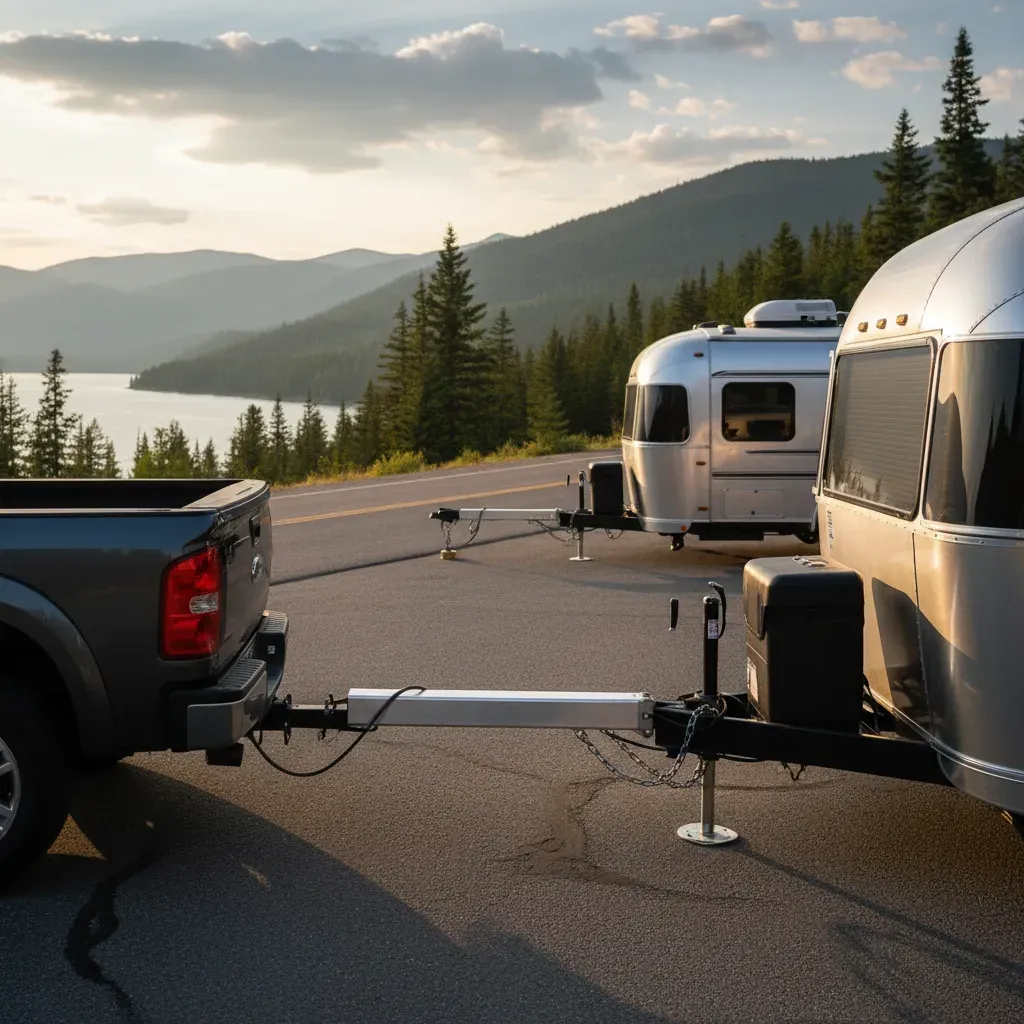
Most people don’t spend much time looking at the trailer tongue.
They’re comparing trailer size, interior height, axle configuration, and maybe the ramp door. The tongue—the section that connects the trailer to the tow vehicle—usually gets about two seconds of attention before the shopping continues.
Ironically, it’s one of the first things you’ll notice once you start towing.
The right trailer tongue length can influence how comfortably the trailer turns, how confidently it backs into a parking space, and how stable it feels behind your vehicle. It’s not the feature that sells the trailer, but it often becomes one of the features owners appreciate the most.
You Don’t Notice Tongue Length Until You’re Behind the Wheel
When you’re standing on a dealership lot, two trailers with different tongue lengths can look almost identical.
Once they’re connected to a tow vehicle, though, the experience starts to change.
The distance between the trailer and the vehicle affects how the trailer reacts when you turn, reverse, or maneuver in tighter spaces. It also changes how much clearance you have between the trailer body and the back of your tow vehicle.
That’s why trailer tongue size isn’t simply another specification on a brochure. It’s part of how the trailer behaves every time you tow it.
The Biggest Differences Show Up During Everyday Towing
You don’t have to drive hundreds of miles to notice the effect of tongue length.
In fact, many owners experience it the first time they back into a driveway or navigate a tight parking lot.
A longer tongue generally gives the trailer a wider turning path and creates additional clearance between the trailer and the tow vehicle. That extra distance can make certain maneuvers feel smoother and reduce the chance of the trailer contacting the vehicle during sharp turns.
At highway speeds, tongue length can also contribute to trailer towing stability by helping the trailer track more predictably behind the tow vehicle. Of course, stability always depends on several factors—including proper loading, weight distribution, suspension, and driving habits—but tongue length is part of the overall equation.
When a Longer Tongue Can Be an Advantage
Like most trailer features, a longer tongue isn’t automatically better.
It depends on how you use the trailer.
If You Frequently Back Into Tight Spaces
Backing up becomes easier when the trailer responds in a predictable way. A longer tongue can provide a little more time to make steering corrections, which many owners find helpful when maneuvering into campsites, driveways, or job sites.
If You Tow With a Larger Vehicle
Pickup trucks and SUVs often benefit from additional clearance during tight turns. A long tongue trailer may reduce the likelihood of the trailer body coming too close to the rear of the tow vehicle while turning.
If Stability Is a Priority
Whether you’re towing equipment, recreational vehicles, or business cargo, a trailer that follows smoothly behind the tow vehicle creates a more comfortable driving experience. Tongue length is one of several design features that can contribute to that feeling of confidence on the road.
Bigger Isn’t Always Better
At the same time, a longer tongue isn’t the right choice for every buyer.
Additional length means the trailer takes up more space when parked, stored, or maneuvered around smaller properties. For buyers working with limited storage space or hauling lighter loads over shorter distances, a standard tongue length may be a better fit.
The goal isn’t choosing the longest tongue available.
It’s choosing one that complements the trailer, your vehicle, and the way you’ll actually use both.
Ask Yourself These Questions Before You Buy
Before comparing measurements, think about your everyday routine.
Will you spend more time towing on highways or maneuvering through neighborhoods? Will the trailer be stored in a tight garage or open lot? Does your tow vehicle need extra turning clearance?
Answering those questions often makes the right choice much clearer than comparing specifications alone.
The best trailer isn’t simply the one with the most features.
It’s the one that feels comfortable every time you hitch it up.
Wagoneer Trailers: Helping You Find the Right Trailer From Hitch to Tailgate
At Wagoneer Trailers, we believe the details matter because they’re the ones you’ll notice every time you tow. From tongue length and axle configuration to interior layout and customization, we help customers across Georgia compare trailers based on real-world performance—not just numbers on a spec sheet.
Whether you’re hauling equipment for work, transporting recreational vehicles, or looking for an enclosed trailer built around your needs, we’ll help you find a trailer that’s designed to tow with confidence.
FIND A TRAILER THAT FEELS GOOD

Cameron Fitzgerald
Owner of Wagoneer Trailers since 2019. Combines 9+ years of transportation industry expertise with a focus on customizable trailer solutions and customer-centric financing.
